
March 11, 2025 · 8 min read
Travelling With Prescription Medication in Ajax: A Preparation Guide
Prepare prescription medication for travel from Ajax with guidance on records, destination checks, packing, storage, time zones and replacement planning.
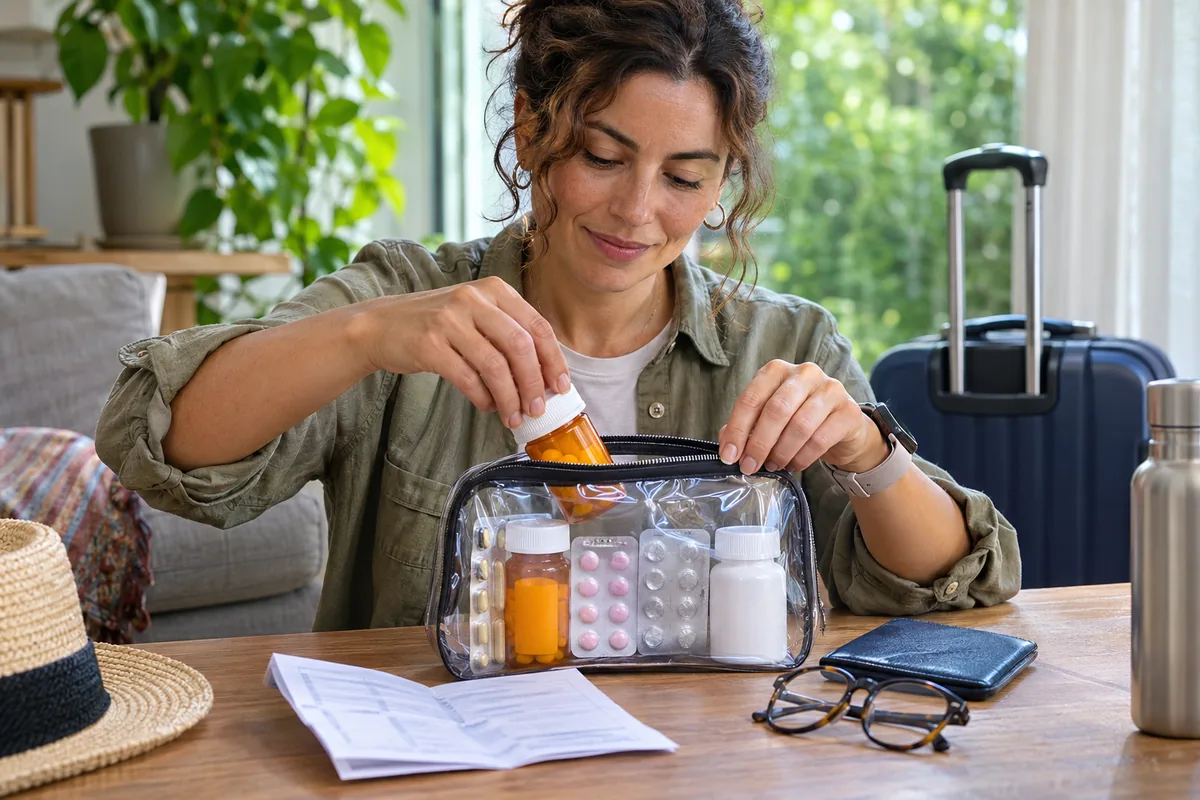
A medication routine can be so familiar at home that it becomes easy to overlook during travel planning. The bottle sits beside the kettle, the pharmacy is a short drive away and the next refill is automatic. International travel removes many of those conveniences at once. A different time zone, missing bag or unfamiliar pharmacy can turn a straightforward routine into a difficult problem.
Preparing prescription medication for travel while you are still in Ajax involves more than counting tablets. You need to confirm what can legally cross each border, document treatment, maintain suitable storage and know what to do if the plan breaks down. Those tasks are best started while your usual prescriber and pharmacist are still easy to reach.
This guide describes an organizing process. It does not establish the legality of a particular medicine in another country or provide instructions for changing treatment. Those questions need current official information and individual professional advice.
Make a complete inventory before asking questions
Gather every product you expect to take, including regular prescriptions, occasional medicines, inhalers, injections, supplements and over-the-counter remedies. A product that seems ordinary in Canada can still have restrictions elsewhere, so the list should extend beyond medicines you consider important.
Record each product’s generic name, brand name, strength and formulation. A liquid, patch and tablet may have different handling needs even when related to the same condition. For combination products, identify all active ingredients rather than relying only on the name on the front of the box.
Ask your pharmacist to check the list against current treatment. Remove outdated instructions and resolve discrepancies before producing travel copies. A clean inventory makes the next conversations more efficient and reduces the chance that a border enquiry or medical letter describes the wrong dose.
Check every relevant country, including transit
Contact official destination authorities or the country’s diplomatic office to ask about the exact medicine and quantity. Include the purpose of travel, duration and route. If transit involves entering another country or collecting baggage, confirm whether its rules apply to the medicines you carry.
The Government of Canada’s travelling with medication guidance explains that products permitted here may be restricted elsewhere and that travellers are responsible for checking. A Canadian prescription is useful documentation, but it does not override another country’s rules.
Save the official response or permit instructions with the trip documents. If information is unclear, follow up with the relevant authority rather than treating silence as approval. For a restricted medicine, involve the prescriber early if an alternative treatment or itinerary might need consideration. Never stop a prescribed treatment abruptly to simplify a border crossing.
Ask useful questions instead of seeking a general yes
An enquiry saying “Can I bring my medication?” may produce an answer too broad to rely on. Ask whether the active ingredient is permitted, whether advance authorization is needed, how much may be carried and what documents must accompany it. Explain whether injections, needles, liquid medication or cooling equipment are involved.
Check whether any permit must be issued before departure and whether the original document must travel with you. If several travellers take the same product, ask whether each needs separate documentation. Avoid packing another person’s supply into your own bag without understanding the applicable rules.
Keep the research attached to the correct trip. Permission for a short visit to one destination does not establish permission for a longer visit somewhere else. Even repeat travellers should recheck official requirements when the route, quantity or medication changes.
Request documentation that matches the treatment
Ask the prescriber what medical documentation is appropriate. Depending on the medicine and destination, this may include a letter explaining the need for treatment, a prescription copy and a list of generic names and doses. The details should agree with the labelled packaging and the quantity being carried.
Build in time for the request. A letter involving a complex regimen may require review, and permits can take longer than routine refills. Ask about any clinic process or fee when arranging the document so that the final week is not spent chasing paperwork.
Keep sensitive health information secure while making essential details accessible. You may not need to carry an entire medical file to explain one prescription. A concise, accurate summary can help an unfamiliar clinician without exposing unrelated history to everyone handling the travel folder.
Arrange the supply while there is time to solve problems
Count the treatment needed for the entire journey, including travel days, and discuss a reasonable contingency supply with the pharmacist. Any extra amount must remain within destination rules. A longer holiday may require coordination with the prescriber, pharmacy and benefit provider before the medication can be dispensed.
Check expiry dates and package integrity. A spare inhaler or auto-injector left from a previous trip may no longer be usable. For medicines with a shorter life after opening, record the relevant date and ask how travel storage affects that period.
Do not rely on a family member mailing additional prescription medicine abroad. Import rules, delays and storage conditions can make that unreliable. If treatment will need replenishment during an extended stay, arrange a legitimate local care pathway before leaving and understand what records that provider will require.
Pack for access as well as identification
Keep essential medication in hand luggage, using original labelled containers and an organized pouch. A checked suitcase can be delayed, and some cargo conditions are unsuitable for temperature-sensitive products. If a carry-on is taken at the gate, remove the medical pouch before handing it over.
Separate items needed during the flight from those that can remain stored. This avoids unpacking the entire supply in a crowded cabin. Keep written instructions with the medicine, particularly if another person may need to help.
CATSA’s medication and medical items guidance explains Canadian security screening considerations. Security permission is separate from import permission at the destination. Check both processes, and remember that the return airport may follow different screening rules.
Protect temperature-sensitive treatment throughout the route
Ask the pharmacist for product-specific storage limits and how to transport the medicine for the actual journey length. Include time waiting for transfers, sitting in a vehicle and checking into accommodation. A short flight does not necessarily mean a short period away from appropriate storage.
Confirm arrangements with the hotel or host rather than assuming a fridge will be available. Ask whether the storage space is secure and suitable, and whether it remains powered when the room key is removed. Products that must not freeze need protection from direct contact with frozen packs or unstable refrigerator compartments.
If storage conditions become uncertain, record what happened and seek advice from the pharmacist or manufacturer. Do not decide a medicine is effective solely because its colour looks unchanged. Keep contact details available so that advice can be obtained before the next dose is due.
Plan timing across time zones
Ask how each medicine should be taken on the outbound trip, at the destination and on the return journey. Some regimens can be shifted simply; others require careful coordination. The correct approach depends on the product, dosing interval and condition being treated.
Use a written schedule that names the time zone. A phone alarm may automatically move when the device updates its location, which can be helpful or confusing depending on the plan. Check settings deliberately rather than assuming an alarm still represents the intended interval.
Ask what to do if a dose is missed, vomited or delayed. Do not take an extra dose to compensate without instructions. A pharmacist can often help turn the clinician’s plan into a practical travel-day reminder, particularly when several medicines are taken at different times.
Review new travel medicines alongside existing treatment
A travel consultation may lead to discussion of vaccines, malaria prevention or medicine for selected travel problems. Bring the complete medication list so that interactions and precautions can be assessed. Include supplements and occasional products, because those are easily omitted from a routine prescription record.
Do not add a sleep aid, motion-sickness medicine or herbal remedy at the airport without checking suitability. Combining products can change alertness or interact with existing treatment. The CDC’s chapter on medication and vaccine interactions in travel medicine describes why a full medication review matters.
Ask for instructions in terms you understand: what the medicine is for, when to take it, when not to use it and which symptoms require care. Clarifying those points before departure is more useful than carrying several prescriptions with uncertain purposes.
Know how you would replace a lost supply
Save prescription information and prescriber contact details separately from the main bag. If medication is lost, contact the insurer’s assistance service or a reputable local medical provider promptly. A Canadian prescription may support the assessment but may not be directly fillable by a foreign pharmacy.
Avoid choosing an unfamiliar product solely because the packaging resembles the usual brand. Names, strengths and formulations can differ, and unreliable sellers may supply poor-quality or counterfeit products. Ask a qualified professional to confirm an appropriate replacement.
Document anything received abroad, including its name, strength and instructions. Keep packaging or clear photographs for the usual pharmacist to review after returning. If the lost medication is time-critical, seek urgent local advice rather than waiting several days for an email from home.
Use one final check before leaving Ajax
Compare the actual packed supply with the medication list, permissions and travel dates. Ensure every container is labelled, each document is accessible and any storage equipment has been tested. Explain the arrangement to a trusted companion when relevant.
After the trip, update the list if treatment changed and return to the usual refill schedule. Record any problems that should be addressed before the next journey, such as a difficult connection or an unsuitable hotel refrigerator.
For a destination-specific medication review in Ajax, request a travel consultation and bring the inventory together with the full route. Our consultation information explains the broader planning process. The best medication travel plan is one that preserves the treatment routine while making unfamiliar borders, schedules and contingencies easier to manage.