
August 8, 2025 · 9 min read
Travel Health for Volunteers in Ajax: Prepare for the Work Ahead
Prepare for volunteering abroad from Ajax with a clear role, appropriate exposure precautions, realistic support arrangements and a plan for returning home.
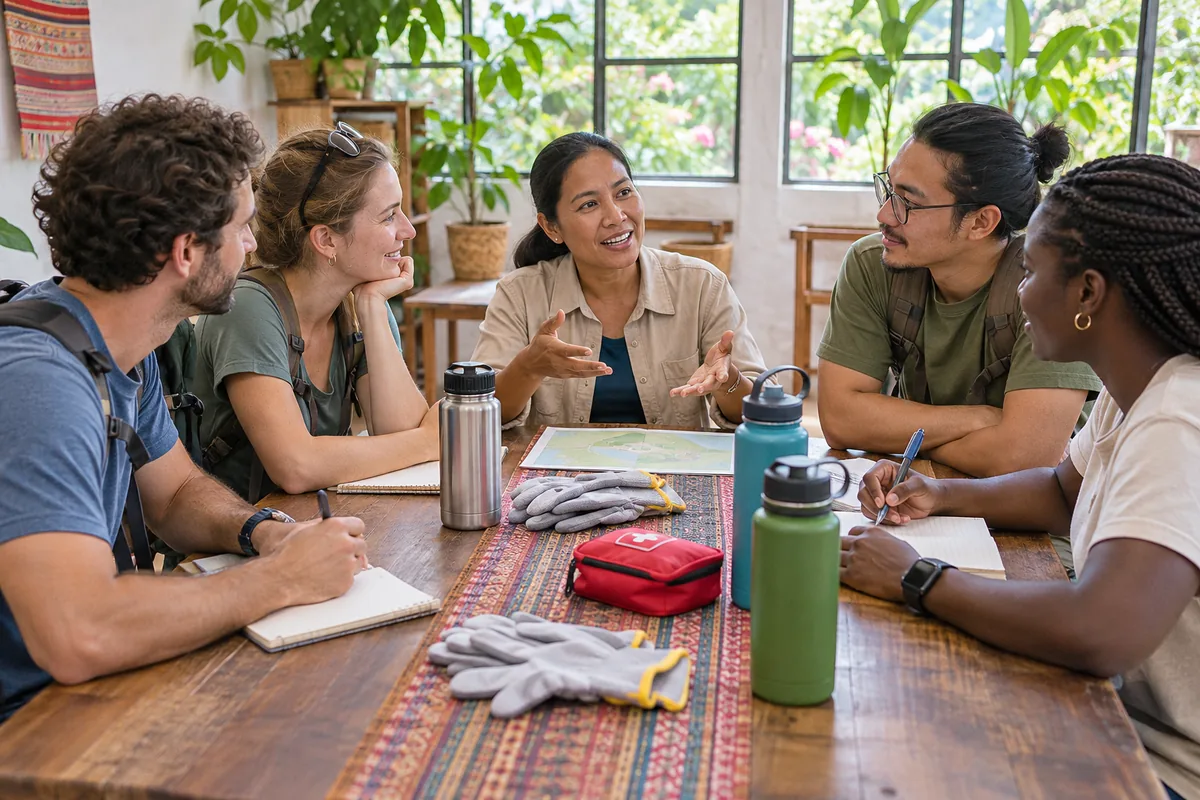
A volunteer placement can sound straightforward until you ask what a normal working day involves. “Community support” might mean organizing supplies in an office, travelling between rural sites, helping with construction, or assisting in a health setting. Each role brings different demands, and a general packing list cannot answer whether you have the training, equipment, and support to do the work safely.
Travel health for volunteers in Ajax starts with a detailed understanding of the placement. The most useful preparation protects both the traveller and the people hosting the project. Arriving with clear responsibilities, realistic limits, and a working support plan is more valuable than arriving with a suitcase of supplies and the expectation that enthusiasm will solve whatever comes up.
Ask for a written description of your role
Request the tasks you will perform, the sites you will visit, the hours expected, and the person who supervises your work. Ask what happens if the project changes after arrival. A role that begins with teaching or administration should not quietly become clinical work, animal handling, or construction simply because another volunteer is unavailable. Different duties may require different qualifications, health preparation, and insurance.
Find out what the host organization actually needs and how the placement fits its longer-term work. Ask whether local staff lead the project, how volunteers are trained, and how handover occurs when people leave. A short placement should not depend on you making decisions that will continue to affect others after you return to Ajax. Clear boundaries make it easier to contribute responsibly.
Canada’s advice for international volunteers recommends investigating organizations and understanding the conditions of a placement. Speak with former volunteers, but also ask current staff direct questions about supervision and support. Personal enthusiasm in a testimonial is useful context; it does not establish what happens during an injury, a security problem, or a disagreement about your duties.
Bring the work details to your health assessment
Prepare an itinerary that includes work locations, accommodation, transport, anticipated exposures, and any independent travel afterwards. Mention tasks involving healthcare, animals, soil, floodwater, lifting, heat, or remote access. Include your medical conditions, medicines, allergies, and vaccination records. The same destination may call for different preparation for an office-based volunteer and someone spending long days in rural fieldwork.
The CDC’s humanitarian aid worker guidance emphasizes both physical and mental preparation and the importance of organizational support. Even if your placement is a small community project rather than a disaster deployment, the underlying questions are useful: what support exists, how self-sufficient must you be, and what happens when conditions change?
Ask whether the organization requires occupational health clearance or documentation beyond a routine travel consultation. Clinical placements may have specific vaccination, screening, training, or professional-registration requirements. Obtain those requirements early and have the appropriate professional interpret them. A letter saying that you attended an appointment is not the same as clearance for every task an organization might later assign.
Keep professional boundaries clear in healthcare settings
If you are a student or non-clinical volunteer, do not perform procedures beyond your training or legal authority because the setting is unfamiliar or resources are limited. Patients deserve competent care and informed consent wherever they live. Ask what you may observe, what you may assist with, and who remains responsible for clinical decisions. The answer should be established before you enter the work area.
Qualified healthcare workers also need to confirm registration, scope of practice, supervision arrangements, and professional liability coverage. Your Canadian credentials do not automatically authorize practice in another country. Discuss the equipment and supplies that will actually be available. A familiar procedure can have different risks when lighting, sterilization, sharps disposal, or emergency backup is unreliable.
Make sure infection prevention training includes hands-on practice with the protective equipment used at the placement. Ask how respirator fit testing, when required, is arranged and how supplies are replenished. A box of gloves in a suitcase is not a complete occupational protection program. If essential protection is unavailable, the organization needs a safe alternative task or a decision to stop the activity.
Plan for blood or body-fluid exposure before it happens
Anyone whose role might involve sharps or contact with blood needs a specific exposure plan. Identify who receives an incident report, where urgent assessment occurs, and how the worker reaches that service outside normal hours. Ask whether the relevant medicines and laboratory support can be accessed promptly. The time to discover that a referral hospital is several hours away is before the first shift.
The Canadian Centre for Occupational Health and Safety’s needlestick and sharps guidance describes prevention and immediate response. Follow workplace training, use appropriate safety equipment, and obtain urgent medical evaluation after an exposure. Do not wait until the end of the placement or your return flight to report a potentially significant incident.
The CDC’s overview of bloodborne occupational risks also highlights safer devices and prevention measures. Ask how contaminated waste is handled and who is trained to manage it. Volunteers assigned to cleaning or laundry can face exposure even if they never provide direct patient care, so the planning conversation should include their tasks rather than focusing only on clinicians.
Match protective equipment to the actual task
Construction, agriculture, conservation, and disaster cleanup involve different hazards. Ask about footwear, eye protection, respiratory protection, tools, lifting equipment, and training. Learn whether the organization supplies properly fitting equipment or expects you to bring it. Do not buy specialized items without confirming the required standard and fit, because an expensive purchase may still be unsuitable for the work.
If the placement includes animals, describe the species and handling tasks during your health review. Avoid casual contact with unfamiliar animals outside the supervised role. The CDC’s rabies information for travellers explains why bite prevention and prompt care matter. A discussion about pre-exposure vaccination does not remove the need for urgent assessment after a bite, scratch, or other relevant exposure.
For outdoor work, establish how the team responds to heat, storms, unsafe air, and other environmental conditions. Who can stop a task? Where can people rest? How are drinking water and meals provided? A volunteer should not need to prove commitment by continuing through symptoms or unsafe conditions. Practical arrangements should make it possible to speak up early without leaving coworkers unsupported.
Inspect the daily living arrangements on paper
Ask about drinking water, toilets, handwashing, food preparation, laundry, sleeping space, and reliable electricity. These may feel like minor domestic details beside the project’s purpose, but they determine whether you can rest, manage medicine, and maintain basic hygiene over several weeks. A placement description should explain the usual conditions and what happens when those systems fail.
If your medicine needs particular storage, obtain a specific answer about the facilities. A refrigerator shared by many people may not provide the storage conditions your treatment requires. Discuss backup power, secure access, and transport between sites. Our long-stay travel health guide can help organize the other practical details of living away from home for an extended period.
Clarify how transport works after dark or when a volunteer is unwell. Ask about seat belts, qualified drivers, and arrangements for reaching care. Avoid assuming that an organization providing airport pickup also provides safe travel for every daily task. If you will drive, cycle, or use boats during the placement, those activities belong in both the health and insurance discussions.
Ask who replaces a volunteer who needs time off. A project with only one person assigned to an essential role can unintentionally pressure that person to work while ill. The host should explain how responsibilities are covered and how a volunteer can report symptoms without having to negotiate directly with every person waiting for assistance. This matters for short placements as well as long ones, because there may be little time to learn informal arrangements. Put the supervisor’s contact and the reporting process somewhere you can find them without asking publicly in a shared room.
Check what insurance actually covers
Tell the insurer that you are volunteering and describe the duties accurately, including manual work, clinical activity, animal contact, remote locations, and any recreational activities. Ask about emergency treatment, evacuation, repatriation, pre-existing conditions, and interruptions caused by illness. Save written answers with the policy. A generic statement that “travel is covered” does not establish coverage for the placement you have accepted.
Canada’s travel insurance guidance explains why policy terms and exclusions deserve attention. Confirm whether the organization provides any coverage and whether you need your own. If several policies are involved, identify which assistance service you contact first and what information it requires. Volunteers should not have to reconstruct that arrangement during an emergency.
Separate organizational evacuation from medical evacuation. Leaving a project because of security conditions may involve different decision-makers and coverage from transport to a hospital for illness. Ask who has authority to suspend the placement and how you will be informed. Keep enough accessible funds and communication options to follow the agreed plan if a local office closes unexpectedly.
Make emotional support part of the placement
Volunteers may encounter distressing situations, uncertainty, or a mismatch between their expectations and what can realistically be accomplished. Discuss support before departure, including a named supervisor, regular check-ins, and a confidential way to raise concerns. Rest days should be part of the plan rather than a reward for reaching an impossible level of productivity.
The CDC’s travel mental health guidance notes particular considerations for humanitarian work and longer stays. If you already receive mental health care, discuss continuity, medicine supply, and the feasibility of remote follow-up with your own clinician. Verify that any intended telehealth arrangement can actually operate from the destination.
Choose someone at home who knows the placement dates and can notice if communication changes. Agree on a realistic contact rhythm that respects local internet limitations. Avoid promising daily updates if the site cannot support them, but establish what a missed check-in means and who should be contacted. A clear arrangement is more useful than anxious guessing on either side of the trip.
Prepare a careful handover and return
Before leaving the project, complete the required handover and record any workplace incidents or exposures through the proper confidential channels. Keep your personal health records separate from information about patients or community members. Do not carry identifiable project records home casually or post people’s health circumstances on social media as part of a travel diary.
Arrange follow-up for relevant exposures, ongoing symptoms, or occupational requirements. Fever after time in a malaria-risk area requires prompt medical assessment, with the travel history stated clearly. Persistent cough, skin problems, diarrhea, fatigue, or emotional distress also deserves an appropriate review rather than being dismissed as the unavoidable cost of volunteering. Bring dates and specific work details to the appointment.
Allow some space after returning to Ajax before taking on a full schedule if the placement was demanding. Review what support worked and give the organization practical feedback through its established process. For a future placement, bring the written role and itinerary to a travel health consultation. Good preparation helps you arrive ready to contribute, recognize your limits, and return with the information needed to look after your own health.