
August 11, 2025 · 9 min read
Travel Health for Sports Teams in Ajax: Organize the Whole Tournament
Plan sports team travel from Ajax with clear health responsibilities, medicine arrangements, illness precautions and practical tournament emergency planning.
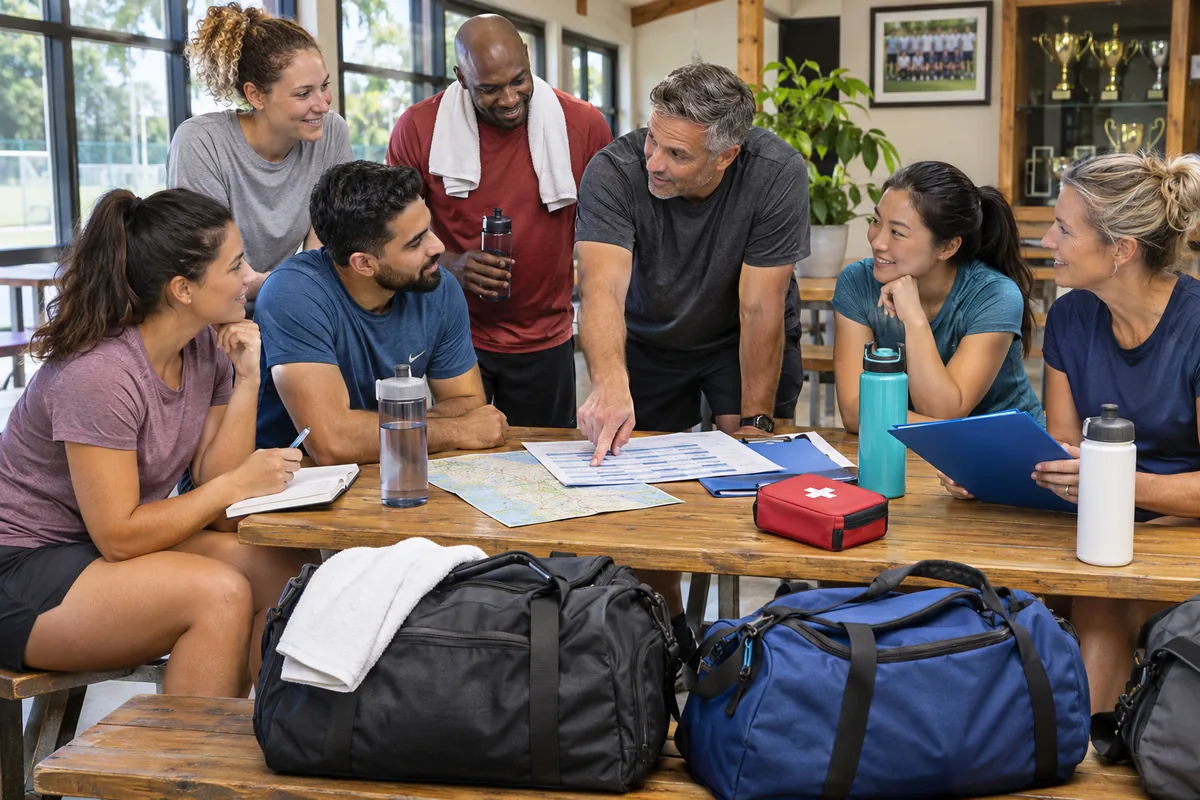
A team travel plan often begins with the game schedule and hotel rooms. Health arrangements appear later, sometimes as a request for parents to complete a form shortly before the bus leaves. That order can miss important details: who carries emergency medicine, who accompanies an injured player to hospital, and who stays with the remaining athletes when the coach cannot do both jobs.
Travel health for sports teams in Ajax works best when it is treated as part of tournament organization from the beginning. The goal is a group that can compete, recover, and respond appropriately when someone becomes ill or injured. A clear plan also protects privacy and makes it easier for athletes to report a concern without feeling responsible for disrupting the entire trip.
Assign responsibilities before collecting forms
Name the person coordinating health information, the adult responsible for emergency contacts, and the person who can make practical arrangements if care is needed. Clarify the qualifications of any clinician or athletic therapist travelling with the group. A coach with first aid training has an important role, but that does not make the coach responsible for diagnosing every symptom or approving return to competition after an injury.
For youth teams, confirm consent arrangements and how parents or guardians will be contacted. Ask what the destination facility requires if a child needs treatment while a parent is absent. These requirements can differ, so use the organization’s current guidance and verify relevant travel documents. Keep contact details available offline rather than relying entirely on a group chat that may be inaccessible without mobile service.
Plan for two simultaneous needs. If one adult accompanies an athlete to hospital, another must remain responsible for the team. If a player is too ill to attend a match, the plan needs a safe supervised arrangement for that person. Naming these roles beforehand is more effective than finding volunteers during warm-up while the transport is waiting outside.
Brief substitute staff and late-arriving chaperones as carefully as the original travel group. A plan can fail when the person covering one afternoon has never seen the emergency contacts or does not know where supplies are kept. Use a short handover that identifies current concerns, the next venue, and who is responsible for each athlete. Keep sensitive clinical details restricted to those who need them, while ensuring that operational information does not depend on one coach’s memory or access to a personal phone.
Collect the information that changes care
Ask athletes or guardians for relevant conditions, allergies, medicines, emergency plans, and contacts through an appropriate private process. Explain who will see the information and how it will be stored. The entire coaching group does not automatically need a complete medical history, but the people responsible for an emergency need timely access to the details that matter.
Review individual plans for asthma, severe allergies, diabetes, seizures, or other conditions before departure. Confirm where essential medicines are kept, whether the athlete can self-manage, and what trained support is required. A spare supply locked in a hotel room is not useful during an away fixture. Make sure the arrangement also works during airport transfers, meals, and optional activities.
Encourage athletes to address unresolved injuries or symptoms before the trip. A tournament is a poor setting for discovering that a recurring problem needs investigation or that a prescription has run out. Travel health preparation complements care from the athlete’s usual clinician and sports health professionals; it does not replace sport-specific assessment or establish fitness to compete.
Check medication rules without interrupting treatment
Athletes competing under anti-doping rules should review every medicine with the appropriate sports authority, including products for asthma, attention disorders, colds, pain, and supplements. Rules can depend on the substance, route, timing, and level of competition. Do not assume that a prescribed medicine is automatically permitted or that a nonprescription product is automatically harmless under the rules.
Sport Integrity Canada’s therapeutic use exemption information explains the process for athletes who need a prohibited substance or method for a legitimate medical reason. Ask about requirements early enough to obtain documents from the treating clinician. Never stop necessary treatment simply to avoid paperwork; coordinate the medical and sport requirements with qualified professionals.
Keep medicines in their original packaging and organize a personal supply for each athlete who needs one. A shared team bag of loose tablets creates avoidable uncertainty about identity, allergies, and instructions. If medicine is administered by an authorized adult, use the team’s approved process and record what was given. Replacements purchased abroad need careful ingredient checks because familiar branding may not mean an identical formulation.
Plan meals around real tournament timings
Map the actual day from breakfast through the final match and return transport. Some venues have limited food options, and a delayed fixture can push a meal several hours later than expected. Ask where the team will obtain safe drinking water, whether bottles can be refilled, and where athletes can wash their hands before eating. Assign practical responsibility instead of assuming the venue will provide everything.
Collect food allergy information early and speak directly with accommodation and catering staff where appropriate. A buffet label or a teammate’s assurance is not a complete allergy plan. Athletes who carry emergency medicine need it accessible at meals, including stops during the journey. Our food allergy travel guide offers additional questions for families and organizers.
Avoid making unfamiliar supplements or energy products part of the team routine. Individual nutrition needs and sport rules deserve qualified advice. Athletes may also have private dietary, cultural, or medical requirements that are easier to accommodate when discussed respectfully beforehand. A predictable meal arrangement reduces the need for last-minute purchases between matches and gives players more time to rest.
Prepare for heat before the first match
A team travelling from Ajax may encounter conditions very different from its usual training environment. Ask about shade, cooling areas, water access, medical coverage, and the event’s procedures for changing or cancelling play. If possible, discuss arrival timing and adaptation with qualified sports health staff. A demanding first session immediately after a long journey may be a poor fit for the conditions.
The CDC’s heat advice for athletes emphasizes pacing activity, recognizing symptoms, and taking precautions in hot conditions. The team should have a clear response when someone becomes unwell, including immediate access to trained assistance. Heat stroke is an emergency; confusion, collapse, or marked deterioration during exertion requires urgent action under the emergency plan.
Make it acceptable to report symptoms before they become severe. Athletes should not have to negotiate with teammates for permission to rest or drink. Coaches can explain that early reporting helps the whole team make sensible decisions. The same principle applies to spectators and volunteers, who may spend long periods in the sun without the planned breaks provided to players.
Keep personal items personal
Shared rooms and changing areas create easy opportunities to mix up towels, razors, clothing, and water bottles. Label bottles clearly and make spare clean supplies available. Establish a workable laundry routine for uniforms and towels, and ask where wet equipment can be cleaned and dried. A crowded hotel room needs enough organization to separate clean items from heavily used gear.
The CDC’s MRSA advice for athletes recommends good hygiene, wound care, and avoiding shared personal items. Skin infections may begin as an apparently minor painful or swollen area. Encourage athletes to report new lesions promptly and seek appropriate assessment rather than covering a worsening problem so that it remains unnoticed during inspection.
Ask venues how shared equipment and surfaces are cleaned between users. The CDC’s guidance for athletic facilities addresses cleaning and infection prevention in these settings. Follow the governing sport’s rules and medical advice about participation with skin problems. A coach should not diagnose an infection from a photograph or decide that a dressing automatically makes participation safe.
Give respiratory and stomach illness a place in the plan
Team travel often combines close contact, shared transport, indoor meetings, and room sharing. Arrange a simple process for reporting fever, cough, vomiting, or diarrhea before joining the group and during the trip. Explain whom the athlete should contact privately. Knowing that illness will be handled calmly may reduce the temptation to hide symptoms until the group has already travelled together.
The CDC’s respiratory illness prevention guidance supports combining appropriate vaccination, hygiene, cleaner air, and additional measures when needed. Keep suitable masks available, consider room arrangements, and follow current health advice if someone is sick. A team meeting can sometimes be shortened or moved to a suitable outdoor setting without affecting the coach’s message.
If several athletes develop similar symptoms, contact an appropriate healthcare service and notify the organizer through the agreed process. Keep a factual record of onset times, shared meals, and relevant contacts without circulating private health details broadly. Do not distribute antibiotics or another player’s medicine around the team. Decisions about testing, treatment, isolation, and return to activity belong with qualified professionals and applicable public health guidance.
Practise the injury response before using it
Identify the nearest appropriate medical facility for each venue and save the local emergency number. Ask whether trained responders, an automated external defibrillator, and an ambulance access route are available. Know the venue’s exact address and entrance instructions. An emergency call is easier when someone can describe the location clearly rather than saying only that the team is at a large sports complex.
For suspected concussion, follow the sport’s established recognition, removal, assessment, and return process. The Canadian Guideline on Concussion in Sport provides a national framework. A player who may have a concussion should be removed from participation and medically assessed; the importance of a final or a long trip home does not justify an informal sideline clearance.
Discuss how an injury changes transport. Someone may need medical advice before flying or enduring a long bus ride, and the original group itinerary may no longer be suitable. Keep emergency contacts and insurer details with the athlete’s relevant records. Ensure that a responsible person remains available to help after the initial appointment, when instructions, prescriptions, and follow-up arrangements still need attention.
Confirm coverage for the actual sport
Describe the competition, training, age group, destination, and any additional activities accurately to the insurer. Ask whether competitive sport, pre-existing injuries, medical treatment, evacuation, and a parent’s travel to assist a minor are covered. Canada’s travel insurance guidance is a useful starting point, but the written policy and insurer’s confirmation determine the specific arrangement.
Give families clear information about what the team supplies and what they must arrange themselves. Avoid presenting a tournament fee as if it automatically includes comprehensive medical coverage. Save assistance numbers in the team travel pack and identify who can authorize necessary expenses. Financial uncertainty should not delay emergency care, but understanding the process beforehand reduces confusion afterwards.
After the tournament, complete any injury or illness follow-up and review the arrangements with the people responsible. Did the team have enough adult support? Were medicines accessible at every venue? Did players know how to report symptoms? Use those answers to improve the next trip. For international events, bring the itinerary and exposure details to a travel health consultation early enough to prepare each traveller appropriately while keeping the team’s practical plan coordinated.