
June 21, 2025 · 9 min read
Travel Health for Kenya in Ajax: City, Safari and Coast Preparation
Prepare for Kenya travel in Ajax with practical advice on safari routes, malaria planning, vaccine records, coastal stays and access to care between stops.
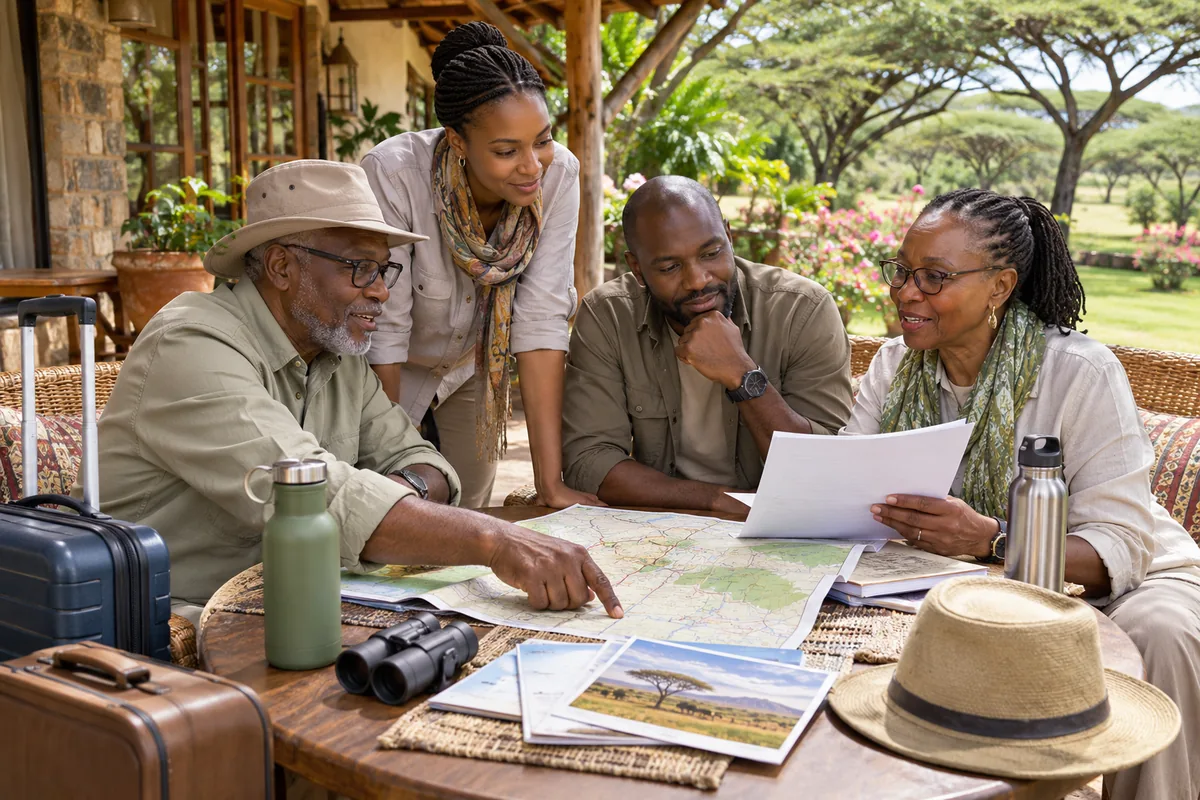
A Kenya itinerary often brings together a city arrival, several safari camps, and time on the coast. Some travellers add a visit to relatives, community work, or a mountain trek. Those experiences should be described separately during travel preparation. The name of a national park or a photograph of a lodge does not tell a clinician how you will sleep, travel, or reach care.
Planning travel health for Kenya in Ajax starts with the sequence of overnight stops. Include the camp names, transfer methods, coastal towns, and any extensions into neighbouring countries. The goal is to make practical decisions before departure: which preventive advice fits the route, what supplies need to stay accessible, and how the trip would change if someone became ill far from a major centre.
Put the camps and transfers on the same map
Ask the operator for the location of every camp and the approximate length of each transfer. A lodge described as serving a well-known reserve may sit outside it or require a substantial drive from the airstrip. Record those details alongside the itinerary rather than keeping them in separate booking emails.
Mark the longest period away from a town with appropriate medical care. Ask whether mobile service is available, how staff communicate when it is not, and who coordinates emergency transport. These questions help you assess the whole route, including the days between the most photographed destinations.
Read the Government of Canada’s Kenya advisory for current regional safety, health, and entry information. The conditions for one part of the country should not be assumed to apply everywhere. Recheck the relevant advice shortly before departure and whenever an operator proposes a significant change of route.
Make malaria prevention part of the itinerary review
Malaria prevention deserves careful attention for many Kenya trips, including safari travel. CDC identifies risk in areas below 2,500 metres, including game parks, while distinguishing the highly urbanized central part of Nairobi. The CDC Kenya destination page provides the current geographic guidance for a clinician to interpret with your route.
Tell the clinician about every camp and coastal stay. Do not assume a high-quality lodge eliminates exposure or that a brief city arrival determines the recommendation for the whole holiday. If medicine is prescribed, discuss your health history and other medications, then obtain written instructions for the full schedule.
Ask what to do if you develop fever during the trip or after returning to Ajax. Seek prompt medical assessment after malaria-risk travel and state that travel history immediately. Preventive medicine reduces risk but does not make fever safe to ignore. Keep the medication name and travel dates available if another clinician needs to assess you.
Review yellow fever separately from malaria
Yellow fever vaccination recommendations vary within Kenya and are not identical to malaria recommendations. CDC distinguishes Nairobi and several coastal areas from much of the rest of the country. A clinician should check the exact route and your suitability for vaccination rather than treating “safari” as a complete medical description.
Entry requirements are another question. They may depend on countries visited or transited before arrival, so include the entire flight sequence and any regional extensions. Confirm current requirements with official destination authorities. Do not rely on an example written for a direct flight from another country or assume that an airport connection is always irrelevant.
Bring any existing international vaccination certificate and ask what documentation should accompany you. Keep original records accessible during travel and protect them from damage. Our yellow fever vaccination guide explains why a health recommendation, vaccine suitability, and border documentation need to be considered distinctly.
Check routine protection and the purpose of the visit
Bring records for routine vaccines and previous travel immunizations. Discuss hepatitis A, typhoid, and any additional protection indicated by your history and activities. A family visit, clinical placement, wildlife project, and short guided holiday can raise different questions even if the travellers share the same arrival flight.
If you will volunteer or work, describe the actual duties. “Community work” could mean office meetings, construction, childcare, or health care. Ask the host organization about supervision, protective equipment, and access to care. Do not let an enthusiastic invitation substitute for a clear description of what you will be expected to do.
Mention pregnancy, immune-suppressing treatment, significant allergies, and recent changes in health early in the consultation. Those details may affect both preventive recommendations and the suitability of remote travel. If departure is close, seek advice anyway and focus on the actions that can still be completed usefully.
Make insect protection practical during game drives
Early starts can make it easy to leave repellent behind while concentrating on cameras and warm clothing. Prepare the day bag the evening before and keep the items you use repeatedly near the top. Follow repellent labels and choose clothing that gives comfortable coverage during the activities you actually plan.
The CDC insect-bite prevention guidance describes measures that complement medication. Inspect screens and nets at accommodation and ask staff for help if something is damaged. A net is useful only if it can be arranged properly around the sleeping area, so check before the room is dark and everyone is tired.
Consider the whole day, including meals outdoors, transfers, and time around camp. Do not reserve precautions only for the game drive because that is the activity labelled as being in nature. Keep a spare supply accessible if luggage is transferred separately, and ask the clinician about products suitable for children or other individual needs.
Use the vehicle schedule to support ordinary health needs
Ask how long drives typically last and whether breaks can be arranged. A traveller managing bladder symptoms, diabetes, back pain, or limited mobility may need details that a general tour description omits. Raise those needs before the first morning so the guide can plan without having to solve them while the group is already moving.
Keep prescribed medicines and a dependable snack in the vehicle bag. If a medicine must be taken with food, plan around the actual breakfast and lunch timetable. Carry water in a way that is easy to use, and discuss any condition-specific hydration advice with your own clinician rather than copying another traveller’s routine.
Choose a manageable pace between camps. Several long transfers on consecutive days can reduce the time available to rest, check supplies, or obtain medical advice. Ask whether one additional night in a location would improve the itinerary. A slightly slower route can make the wildlife experience more enjoyable as well as easier to manage.
Keep animal observation separate from animal contact
Follow the guide’s instructions about remaining in vehicles, walking around camp, and maintaining distance. Avoid feeding or touching animals, including unfamiliar dogs and cats near accommodation. An animal accustomed to visitors is still an animal whose behaviour and health you cannot reliably assess.
Discuss rabies pre-exposure vaccination if activities or delayed access to treatment make it relevant. After a bite or scratch, clean the area and seek urgent medical assessment, even if you were vaccinated before travelling. The CDC rabies prevention guidance explains why potential exposure requires a professional response.
Ask the operator how an injured guest would leave camp and which facility could provide assessment. Keep written treatment records if care is given abroad. An exposure plan should work outside standard office hours and should not depend on waiting until the group reaches its next scheduled city stop.
Treat coastal and freshwater activities differently
A coastal stay often changes the pace of the holiday, but it still requires attention to swimming conditions, sun exposure, and medical access. Follow local warnings, choose settings appropriate to swimming ability, and make child supervision explicit. Ask how you would obtain help from the accommodation rather than assuming that all coastal properties have equivalent services nearby.
Avoid swimming or wading in freshwater where schistosomiasis may be present. Clear water does not establish that it is free of the parasite. The CDC schistosomiasis prevention advice explains the importance of avoiding contaminated freshwater exposure. Ocean swimming and a freshwater lake excursion should not be treated as the same activity.
If boating or diving is planned, ask about qualified supervision, appropriate equipment, and emergency arrangements. Check the specific activity with your insurer. A final beach extension can involve a different operator from the safari, so confirm details directly instead of assuming the first company’s arrangements apply throughout the trip.
Give a Mount Kenya extension its own preparation
If mountain travel is included, obtain the sleeping elevations and ascent schedule. A successful safari does not acclimatize you for a rapid climb. Discuss the route with a clinician, especially if you have prior altitude symptoms or a medical condition that could affect tolerance.
Review the CDC altitude guidance and ask the operator how it responds when someone needs to stop ascending or descend. Make sure a traveller turning back is accompanied appropriately. The highest planned point, guide arrangements, and evacuation provisions should be disclosed to your insurer.
Allow time to change the schedule without making the entire journey depend on reaching a particular point on a particular morning. Discuss which booking could move and how you would reconnect with the rest of the itinerary. The ability to turn around should be a practical option, not merely a sentence in a brochure.
Make meals and medication reliable between locations
Ask where safe drinking water and meals will be available during the longest transfer. Carry suitable snacks if missed meals could be difficult and tell each operator about important allergies. Use thoroughly cooked food served hot and a dependable water source, following the Canadian food and water guidance.
Keep regular medication labelled and accessible, with a readable list of generic names. Confirm rules for controlled medicines and any transit countries. If supplies require refrigeration or charging, ask about the actual facilities at every camp. A city hotel, tented camp, and coastal lodge may have very different arrangements.
Discuss self-care limits before departure, including when diarrhea, vomiting, fever, or injury requires assessment. Know who will call for help and how the insurer’s assistance service becomes involved. A medical kit is useful, but it cannot replace a route to care when symptoms exceed what you can safely manage yourself.
Before a flight to a smaller airstrip, ask about baggage limits and how medical equipment is handled. Explain any essential device or supplies while the booking can still be adjusted, and obtain the operator’s instructions directly. A soft-bag requirement or weight limit can affect how you divide luggage between the safari and coastal parts of the journey. Keep essential medication with you if larger bags are stored elsewhere. Confirm when stored luggage will be returned and who is responsible for the transfer. That practical detail matters if the itinerary changes and you need to reach a medical appointment or leave a segment early.
Keep one clear document for the whole journey
Combine the route, emergency contacts, insurance information, medication list, and relevant records in a format available offline. Share necessary details with a companion and a trusted person at home. If the operator changes a camp or transfer, update the same document so everyone is working from the current plan.
Bring the itinerary to a travel health consultation in Ajax and review current official notices before leaving. Keep records of any treatment and report the complete travel history if illness develops later. Kenya travel can include several distinct environments; clear preparation helps you move between them with decisions already made about the matters that are difficult to improvise.