
June 6, 2025 · 9 min read
Travel Health for Indonesia in Ajax: Prepare for Every Island
Arrange Indonesia travel health in Ajax with island-specific planning for Bali, eastern routes, boat trips, mosquitoes, animal exposure and access to care.
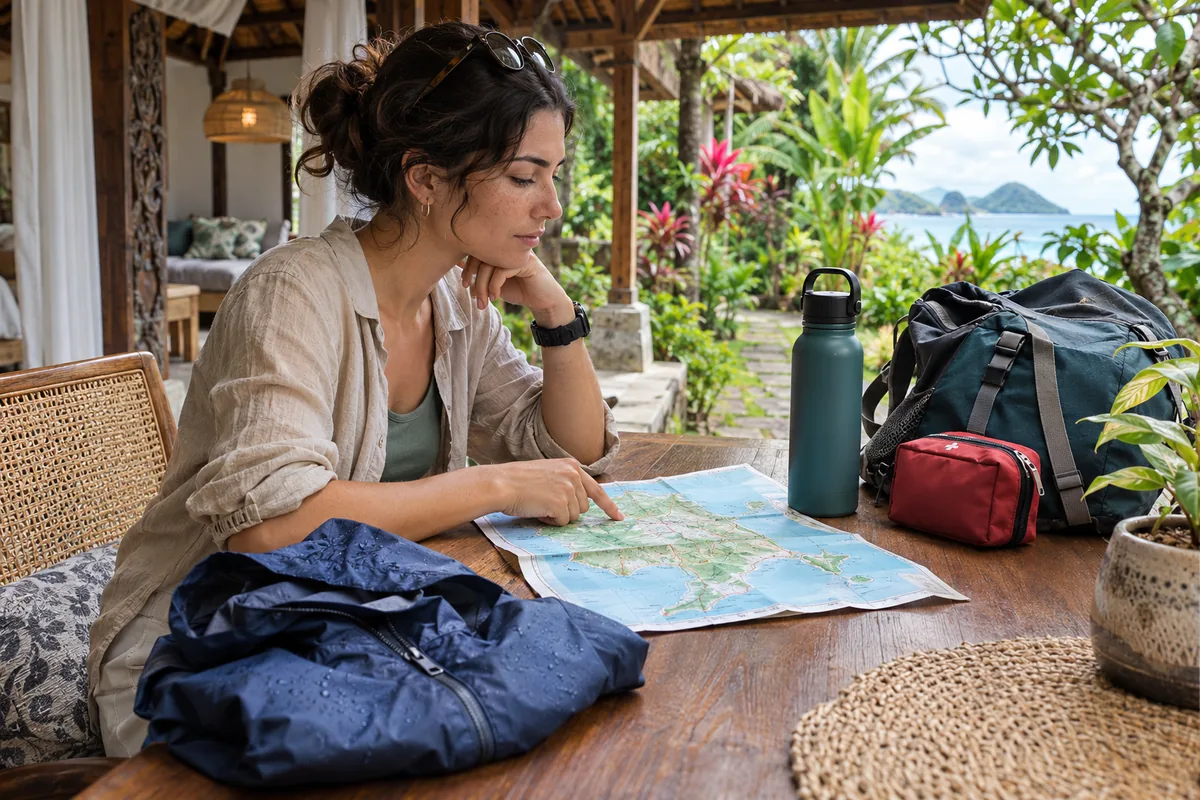
Two travellers can both say they are going to Indonesia while preparing for very different trips. One may stay in a Bali resort and take short day excursions. Another may connect through Bali before continuing to a remote island, a liveaboard vessel, or a wildlife project. The shared arrival airport does not make their health needs interchangeable.
Travel health for Indonesia in Ajax works best when you name each island and overnight location. Include the boats, small aircraft, and road transfers that connect them. The important questions are often hidden in those connections: where your medication will be stored, how an illness would be assessed, and whether weather could delay access to a larger medical centre.
Make an island-by-island itinerary
Create one line for every overnight stop, giving the island, town, accommodation, and dates. Mark nights spent aboard a vessel separately from nights ashore. If an operator uses a broad regional label, ask for the actual route and likely anchorages. A clinician needs more than the name of the company selling the trip.
Write down optional extensions as well. Adding Komodo, a rural Lombok stay, or a longer journey east can change the discussion that began around Bali. You do not need to abandon spontaneity, but you should know which changes would justify updated advice. Share the same route with your insurer so the coverage discussion reflects the activities you intend to do.
Review the Government of Canada’s Indonesia advisory for regional health, safety, natural-hazard, and entry information. Requirements can change, including procedures connected with transit or arrival. Use current official instructions close to departure instead of relying on a form or screenshot saved by a previous visitor.
Do not extend Bali malaria advice to the whole country
Indonesia’s malaria recommendations vary substantially. CDC lists no malaria transmission in Bali resort areas or Ubud, but identifies risk in eastern Indonesia, including Labuan Bajo and the Komodo Islands, and in certain rural areas elsewhere. The CDC Indonesia destination guidance should be checked against your exact route.
That distinction matters when a short flight is marketed as an effortless extension. The journey may be convenient while still changing preventive recommendations. Ask the clinician whether malaria medication is indicated, which option is suitable for you, and how the schedule fits days spent moving between areas. Follow the prescribed instructions rather than stopping when you return to your first hotel.
Mosquito prevention still matters in places where malaria medicine is not recommended. Consider where you will sit for breakfast, wait for boats, and spend the evening. Put repellent in a bag you will carry during those activities. If you choose an open-air room, ask how the sleeping area is protected and inspect any net before the first night.
Discuss vaccines without assuming every island needs the same list
Bring routine immunization records and details of previous travel vaccines to your appointment. Hepatitis A, typhoid, and other recommendations should be considered in the context of your history and activities. Japanese encephalitis may enter the discussion for longer stays or particular outdoor and rural exposures. A brief urban visit and a month of fieldwork require different questions.
The CDC Japanese encephalitis prevention guidance explains how vaccination fits with mosquito precautions. Tell the clinician if your plans are uncertain, because an open itinerary can include exposures that a fixed resort booking would not. Do not assume that receiving several vaccines removes the need to review accommodation and daily habits.
Pregnancy, pregnancy plans, immune-suppressing treatment, and significant medical conditions deserve explicit discussion. Current mosquito-borne disease notices may affect advice for some travellers and their partners. Check the live destination guidance before departure, and let your clinician interpret it for your circumstances rather than relying on the date printed on an older travel article.
Before an island extension, compare the departure day with the arrival day at your next stop. If the itinerary includes an early flight and immediate boat boarding, ask where you can obtain food, refill a bottle safely, and access a bathroom between them. A transfer arranged by two different companies can leave a gap that neither operator has considered. Confirm who meets you, which phone number works locally, and what happens if the first connection is late. Write that information beside the booking so a companion can use it too. The route becomes easier to manage when responsibility at each handover is clear.
Approach monkey sites with a clear boundary
Visitors can underestimate animal exposure when monkeys are accustomed to tourists. Familiarity with people does not make feeding, carrying, or posing beside an animal a sensible part of the visit. Keep food secured, follow site instructions, and avoid reaching for an item an animal has taken. Children should stay close enough for adults to intervene before contact happens.
Dogs and cats also deserve distance, including animals around accommodation that seem relaxed. Discuss rabies pre-exposure vaccination if your activities or remote itinerary make it relevant. After a bite or scratch, wash the wound and obtain urgent medical assessment, even if you were vaccinated before travel. The CDC rabies guidance explains why post-exposure care still matters.
Ask your accommodation or operator where that assessment could be arranged. A plan that depends on returning to a major island the next day may need reconsideration. Keep treatment records if care is provided abroad and contact your insurer’s assistance service for help coordinating onward treatment when necessary.
Plan medicines through boats, airports and heat
Keep essential medication in your personal carry-on bag and use labelled packaging. Check Indonesian and transit-country rules for controlled medicines before departure. The Government of Canada’s advice on travelling with medication explains why a Canadian prescription alone may not resolve every border requirement.
For temperature-sensitive supplies, ask a pharmacist how to maintain appropriate conditions during the longest possible transfer. Consider delays, exposed docks, and a bag left on a boat deck. A cooling pouch needs to be suitable for the specific medicine; an improvised arrangement can create problems if it makes the product too warm or too cold.
Bring enough essential supplies for plausible disruption within the limits of destination rules. Know the generic names and keep a medication list offline. If you rely on a powered device, ask about charging and overnight power at each stop. The answer may differ between a city hotel, a small island lodge, and a vessel that runs its generator at set times.
Make liveaboard and diving questions specific
Ask the operator who provides first aid, how an emergency is communicated, and where a seriously unwell passenger would be taken. Confirm that the answer covers the most remote day of the route, not only the departure harbour. Request details about evacuation arrangements and discuss the activities with your insurer before making assumptions about coverage.
If you will dive, review fitness to dive with an appropriate professional when indicated, especially if your health has changed since the last trip. Check equipment arrangements and the operator’s emergency procedures. Plan the timing of flights after diving using qualified diving guidance. Our scuba-diving travel health guide provides a useful starting list of questions.
Non-divers also need a workable plan aboard a vessel. Ask about shaded areas, access to drinking water, railings, sleeping conditions, and whether tenders can accommodate mobility needs. A beautiful route can become uncomfortable if the daily boarding arrangement is unsuitable. Resolve those details while alternative operators or itineraries are still available.
Prepare for food choices between scheduled stops
During a resort stay, meals may be easy to arrange. On a transfer day, you may depend on a small harbour shop, an unfamiliar roadside stop, or food prepared early for a boat excursion. Carry a reliable snack and ask when the next meal will be available. This is especially useful for children and travellers who need predictable eating times.
Choose thoroughly cooked food served hot and a dependable drinking-water source. The Canadian food and water guidance explains the precautions. If you have allergies, communicate them to the person organizing meals on every segment, including the boat crew. A hotel note does not automatically reach an independent excursion operator.
Discuss a plan for diarrhea and dehydration before departure. Know when to seek assessment rather than trying to continue a strenuous excursion. Keep oral rehydration supplies if recommended for your trip, and ensure that you understand how to prepare them safely. A small health kit is useful only when you know what each item is for and when it is insufficient.
Respect changing water and weather conditions
Check whether a beach is suitable for swimming on the day you visit and follow local warnings. Calm-looking water does not establish that currents are manageable. Choose supervised settings where possible and avoid making a distant swim the centrepiece of a day when you are tired, unwell, or unfamiliar with the conditions.
Heavy rain can affect roads and water quality. Avoid floodwater and unnecessary contact with potentially contaminated freshwater or mud, particularly when you have cuts. The CDC leptospirosis prevention information explains why flood-related exposure matters. A cancelled excursion is frustrating, but it should not prompt an improvised route through unsafe water.
Build a buffer before international flights when the preceding journey depends on a small boat or weather-sensitive connection. Keep the next accommodation and airline contact information available offline. The flexibility also helps if someone needs a medical review before travelling onward rather than being pushed through a series of increasingly difficult transfers.
Test the plan against one delayed connection
Imagine that a boat cannot leave until the following morning. Where would you sleep, how would you obtain suitable food, and would you still have access to all essential medication? This simple scenario is more useful than packing for every imaginable emergency. It helps identify the supplies and booking flexibility that matter most to your particular island route.
Ask whether the operator keeps passengers together during disruptions or expects everyone to arrange their own accommodation. Save the booking terms and contact details offline. If someone in the group has a medical need that cannot wait, explain it in advance and identify an appropriate alternative rather than depending on an improvised solution at the dock. A small additional cost for a flexible room can be easier to manage than a chain of missed connections.
Think about communication as well. Decide who at home should be told when your overnight location changes and how you will contact them if mobile service is weak. Give that person the operator’s details before departure. Keep passports and essential paperwork protected from water, but accessible when you need to rebook transport. A travel plan becomes more resilient when these everyday details remain usable during the delay you are most likely to encounter.
Design a route to care before you need it
For each remote stop, identify the nearest place capable of assessing a significant illness and the transport needed to reach it. Ask how arrangements work at night and who makes the call if the usual guide is unavailable. Include your insurer’s emergency number in the same document so a companion can help without searching multiple apps.
Before departure from Ajax, bring this route and your medical history to a travel health consultation. Recheck current official guidance near the travel date. If fever or another concerning illness develops during or after the trip, report every island visited and any freshwater, animal, or diving exposure. Specific information is much more useful than describing the whole journey simply as a holiday in Bali.