
June 12, 2025 · 9 min read
Travel Health for Costa Rica in Ajax: Rainforest, Coast and Cloud Forest
Build a Costa Rica health plan in Ajax for rainforest lodges, coastal days, mosquito precautions, wet-weather activities and reliable routes to medical care.
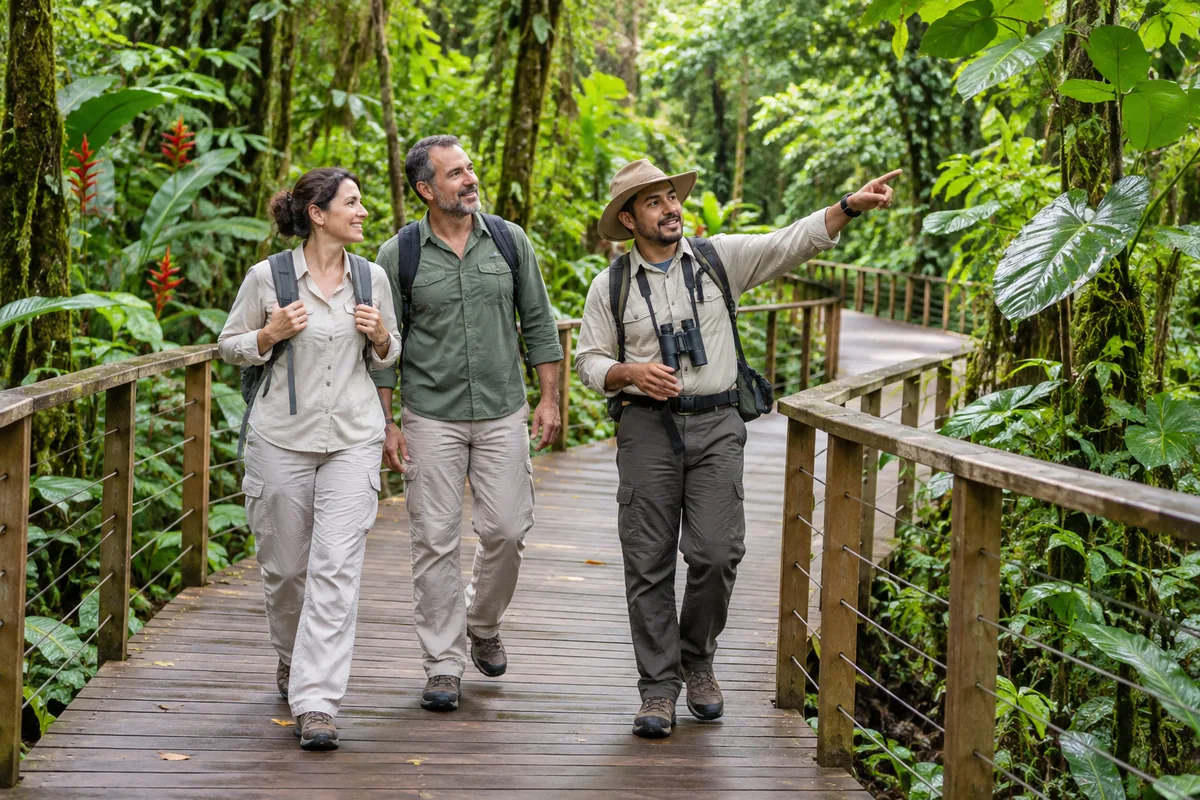
Costa Rica’s appeal often lies in the variety packed into a relatively short visit. A few nights near a volcano may lead to a cloud-forest walk, a wildlife lodge reached by boat, and a final stay beside the ocean. That variety is also the reason a health plan should follow the route closely. Accommodation that looks nearby on a map may involve a long transfer and a different level of access to care.
Preparing travel health for Costa Rica in Ajax means asking how the trip will work on an ordinary day and on a difficult one. What happens if rain closes a route, a traveller develops fever, or a child cannot manage the planned activity? The answers help you choose sensible supplies, appropriate preventive advice, and an itinerary that can change without becoming unmanageable.
Locate the lodges before making health decisions
Record the province, nearest town, and access route for every accommodation. Tourism descriptions may emphasize a national park or scenic region without making the actual location clear. Ask for a map pin and whether the final transfer is by road, boat, or on foot. Note any place where arrival and departure depend on a scheduled service.
Give a clinician the same information. Provincial boundaries can matter for malaria assessment, and remote accommodation affects how quickly you could obtain care. A single airport arrival does not describe an itinerary that crosses several distinct settings. Include optional extensions so they can be discussed while you are still planning.
Read the Government of Canada’s Costa Rica advisory for current regional, transport, health, and entry information. Recheck it before departure. Requirements connected with previous countries or transit should be confirmed for the complete journey rather than inferred from a direct Canada-to-Costa-Rica example.
Discuss malaria using the current regional guidance
Malaria prevention in Costa Rica is not a single countrywide answer. CDC identifies transmission in Alajuela and Limón provinces and distinguishes those areas from the rest of the country. The CDC Costa Rica destination page should be reviewed against your accommodation locations and excursions with a clinician.
Do not decide based on whether a lodge calls itself luxurious, eco-friendly, or remote. Those descriptions do not replace geography. If preventive medicine is recommended, discuss the option that fits your medical history and obtain clear instructions for the full course. Ask how to handle a change in itinerary rather than making an assumption after adding another overnight stop.
Mosquito precautions matter outside malaria-risk settings too. Carry repellent during daytime nature walks and use it as directed. Ask whether rooms are screened and how doors are kept closed without making the room uncomfortable. A sleeping area that feels close to nature should still have a practical way to reduce insect exposure.
Review vaccines before you choose the final pace
Bring routine vaccination records and previous travel documents to your appointment. Discuss hepatitis A and other vaccines indicated by your history and route. Tell the clinician about pregnancy plans, immune-suppressing treatment, allergies, and recent changes in health. The right recommendation may differ between people sharing the same rental car.
Some travellers combine Costa Rica with another country. Include that whole sequence when discussing yellow fever documentation or other entry requirements. A recommendation to protect health and a certificate requested at a border are separate questions. Current rules should be checked with official sources for the actual route, including relevant transit details.
If you are leaving soon, do not assume the consultation has lost its value. Advice about mosquito protection, medication, activity choices, and medical access can still be useful. Bring what records you have and identify the unresolved bookings so the discussion can focus on decisions that remain within your control.
Build forest walks around the people taking them
A trail described as easy may still involve mud, roots, steps, and several hours away from a vehicle. Ask for the distance, terrain, expected duration, and places where the group can turn back. Consider footwear and walking experience honestly, especially if the excursion follows a long flight or an early transfer.
Keep essential medicines in the daypack and protect them from rain. Tell the guide about relevant limitations before the walk begins, while an alternative route is still possible. A small group can adapt more easily when expectations are clear. Avoid making the slowest traveller feel responsible for changing plans that should have been discussed at booking.
Choose a comfortable pace with time to observe wildlife and footing. Keep hands away from animals and vegetation you have been told not to touch. A guide’s local knowledge is useful, but each traveller should still understand where the group is going, what to do if separated, and how an injury would be managed on that particular trail.
Take wet-weather exposure seriously
Rain can transform a trail or river quickly. Ask the operator how decisions are made when conditions deteriorate and what alternatives are available. A clear cancellation policy is helpful because it reduces pressure to continue solely to avoid losing money. Do not treat a booked activity as an obligation when local advice says conditions are unsuitable.
Leptospirosis can follow contact with water or soil contaminated by infected animals, and flooding can increase exposure. The CDC prevention guidance advises avoiding potentially contaminated floodwater and protecting wounds. An attractive riverbank does not establish that wading is appropriate after heavy rain.
Keep a dry change of clothing and footwear available on transfer days. If a route becomes impassable, use the operator’s safe alternative rather than walking through water to preserve the schedule. Let the next accommodation know about the delay and update a contact at home. Small administrative changes are preferable to turning a transport problem into an injury or illness.
Ask practical questions about adventure operators
Zip-lining, rafting, horseback riding, and surfing involve different equipment and abilities. Ask who supervises, what training is provided, and how emergency assistance is arranged. Explain any relevant health condition before paying. An operator should be able to describe the activity clearly enough for you to decide whether it fits your circumstances.
Check your insurance for the named activity, including any requirements about guides, certification, or equipment. Do not rely on the word “adventure” in a policy advertisement. The Canadian travel insurance guidance helps frame questions about coverage and assistance. Keep the insurer’s contact details where a companion can find them.
For families, ask about age, size, and ability requirements rather than assuming that a child’s enthusiasm is enough. Confirm that suitable equipment is available and that there is a comfortable alternative for anyone who opts out. An enjoyable family day does not require every person to participate in every activity.
Make coastal days responsive to local conditions
Before swimming, check the beach’s warnings and whether lifeguards are present. Ask locally about currents and conditions, then follow posted instructions. A beach that looks calm from a hotel balcony may still be unsuitable for swimming. Choose a location and time that match the least confident swimmer in the group.
Create a clear supervision arrangement for children and avoid dividing attention between water supervision and another task. Schedule rest, shade, and drinks before the day becomes tiring. Keep a simple route back to accommodation so someone who feels unwell does not have to wait through the rest of the group’s plans.
If surfing lessons are booked, tell the instructor about experience and swimming ability honestly. Ask how the group is kept together and what happens if a participant wants to stop. Rent or use equipment through an operator who can explain its suitability rather than selecting solely by price or appearance.
Plan food and water for the longest transfer
The easiest day to overlook may be the one between lodges. Ask where meals and drinking water will be available, and carry a reliable snack. A long road or boat journey can leave fewer choices than the destination itself. Travellers with food allergies or conditions affected by missed meals should make those needs clear in advance.
Use dependable drinking water and choose thoroughly cooked food served hot. Review the Government of Canada’s food and water advice before departure. If a lodge provides refill water, ask how it is made safe rather than assuming that every tap or outdoor container serves the same purpose.
Discuss a plan for diarrhea, vomiting, and dehydration with your clinician. Know when self-care is appropriate and when you should seek assessment. Keep any recommended oral rehydration supplies accessible, with instructions you understand. A remote lodge is an inconvenient place to discover that the group has packed several medicines but no clear plan for using them.
Keep wildlife observation at a distance
Seeing animals in their habitat is a major reason many people choose Costa Rica. Let the guide set respectful distances and do not feed, touch, or handle wildlife for a photograph. The same caution applies to unfamiliar dogs and cats near accommodation. Explain the rule to children before a close encounter becomes exciting.
After an animal bite or scratch, wash the area and obtain prompt medical assessment. Discuss rabies vaccination before departure if your work, activities, or limited access to care make it relevant. The CDC rabies prevention advice emphasizes assessment after a potential exposure even when the animal’s behaviour seems unremarkable.
Ask how the operator handles an animal-related injury and where treatment is available. Save the answer with your emergency contacts. A practical plan does not require expecting an incident; it simply means that the first steps are already clear if one occurs.
Pack for a damp afternoon without overloading the walk
Choose a small set of items that remain useful when the weather changes: an appropriate rain layer, protected medication, a dry spare layer where needed, and a way to keep essential contact information readable. Ask the guide whether the route returns to the vehicle or continues directly to another activity. That determines whether spare supplies can stay behind or must be carried. Before the first walk, check the pack’s weight and how it sits on your shoulders. A bag that feels light beside the hotel bed may become awkward on a muddy trail. Remove duplicate items while keeping the supplies that address your own health needs and the operator’s requirements.
Use a recovery morning as part of the itinerary
Consider leaving one morning unbooked midway through a busy nature trip. It can absorb a delayed transfer, give wet clothing time to dry, or allow someone to rest without missing the holiday’s main activity. Flexibility is especially useful when you are moving through several lodges and cannot simply extend the current stay.
Use that pause to check supplies and the next segment’s conditions. Confirm the pickup time, prepare medication for the transfer, and ask whether weather has changed the plan. If someone has persistent symptoms, arrange assessment while you are still near suitable care rather than assuming the next remote stop will be easier.
Bring your route, records, and activity list to a travel health consultation in Ajax. Revisit official guidance near departure and keep a record of locations and any treatment during the journey. If you become ill after returning, share that detail with your clinician. It turns a broad description of a nature holiday into information that can guide a useful assessment.