
June 18, 2025 · 10 min read
Travel Health for Brazil in Ajax: Cities, Waterfalls and Amazon Routes
Prepare for Brazil travel in Ajax with route-specific guidance on yellow fever, Amazon visits, city events, mosquito precautions and practical medical access.
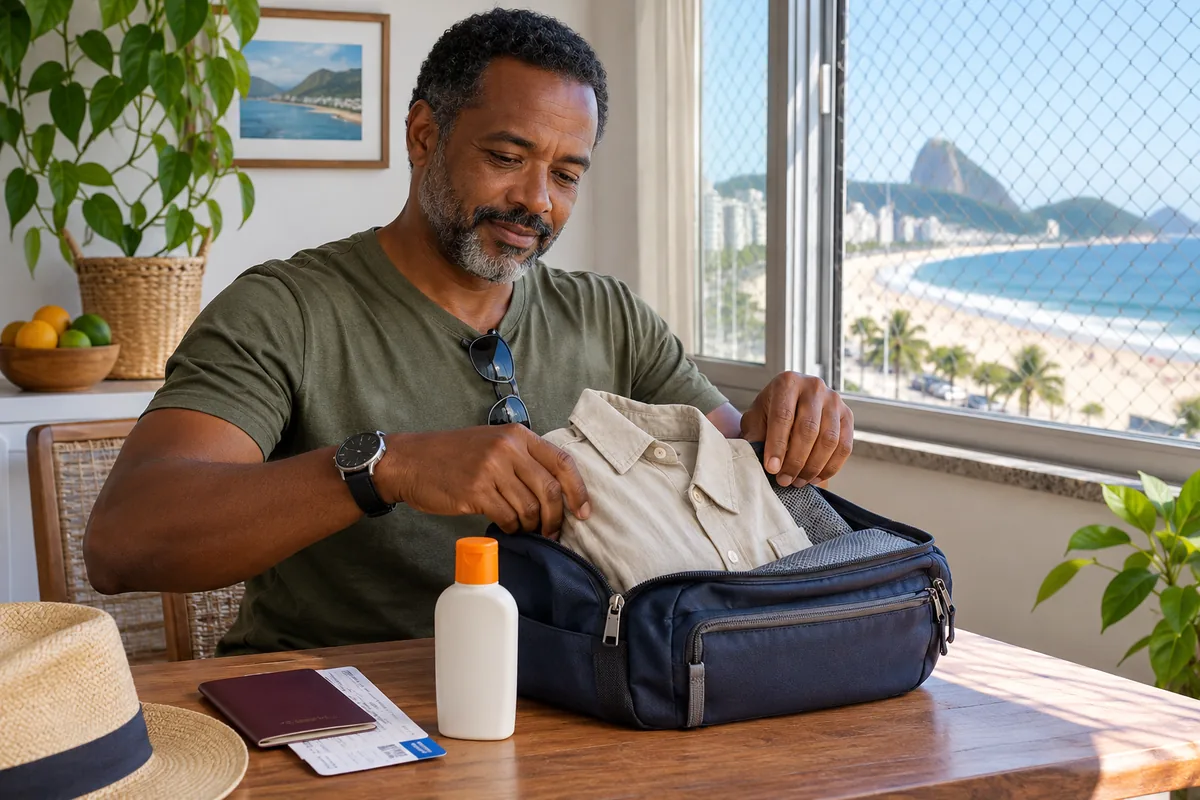
Brazil can be a city break, a family visit, a major celebration, a wildlife trip, or several of those journeys joined together. A traveller might spend a week in Rio de Janeiro, fly to see Iguaçu Falls, and then continue to an Amazon lodge. The itinerary crosses settings with different health considerations even though the passport remains in the same country.
Travel health for Brazil in Ajax should begin with a map and the names of the places where you will sleep. Include domestic connections, remote excursions, and any border crossings around the falls or elsewhere. This makes it easier to discuss the prevention that applies to your route and to avoid assumptions based on a friend’s trip to a different part of Brazil.
Give each region its own line in the plan
Record the state, city or town, accommodation, and dates for each stop. For an Amazon lodge, ask for its actual location rather than listing only the airport used to reach it. For a family visit, include rural homes and day trips that may not appear on a formal booking confirmation.
Write down the activities that are still under consideration. An itinerary centred on museums and restaurants can change when a wildlife excursion or river journey is added. You can preserve flexibility while identifying which additions would justify updated advice. Give the same details to your insurer so the coverage conversation matches the trip you intend to take.
Read the Government of Canada’s Brazil advisory for current regional information, entry requirements, and health advice. Check it again near departure. A multi-country route needs a separate review of each destination and relevant transit point, particularly when documentation depends on recent travel history.
Understand that yellow fever advice reaches beyond the Amazon
Yellow fever recommendations in Brazil are not limited to remote jungle travel. CDC recommends vaccination for eligible travellers visiting many areas, including Rio de Janeiro, São Paulo, and Iguaçu Falls. The CDC Brazil chapter provides the geographical detail for an individualized assessment.
Discuss the recommendation early enough to review your health history and previous vaccination records. Age, pregnancy, immune-suppressing treatment, and other factors can affect suitability. Do not assume that a vaccine is appropriate simply because it appears on a destination list, or that a medical waiver automatically resolves entry issues in every country.
Separate the health recommendation from the paperwork question. Rules for entering Brazil and rules for a country visited afterward may differ. Confirm the current requirements for the full route with official authorities. Carry any required original certificate in a protected, accessible place and keep a backup copy without assuming the copy substitutes for the original.
Review malaria for the actual northern or rural extension
Malaria risk also varies within Brazil, but its map is not identical to the yellow fever map. CDC describes malaria in Amazon and other designated areas, while cities such as Rio de Janeiro and São Paulo and the Iguaçu Falls area are treated differently. A yellow fever recommendation should not be used to infer whether malaria medicine is needed.
Bring the lodge location, length of stay, and expected excursions to the consultation. If medication is prescribed, discuss interactions and obtain instructions for the complete course, including the period after leaving the risk area. Do not stop because the next hotel feels more urban or because mosquitoes are less noticeable there.
Ask your clinician what to do if fever develops during travel or after returning home. Seek prompt assessment after malaria-risk travel and mention that history immediately. Keep a record of every stop because a clinician may need to distinguish a city-only visit from a route that included several nights in a forested region.
Make mosquito protection part of city routines
Dengue and other mosquito-borne infections can affect urban travel as well as rural excursions. Keep repellent accessible during sightseeing and outdoor meals, follow its label, and select accommodation that can exclude mosquitoes. The CDC insect-bite prevention guidance explains practical ways to reduce exposure.
Think about when you are most likely to forget. A morning walk for coffee, an outdoor queue, or a late return after an event can fall outside the careful routine used for a planned nature excursion. Put supplies beside the items you take every day rather than reserving them for a special trip bag.
If pregnancy or pregnancy plans are relevant, discuss current Zika advice with a clinician. Include partners in the conversation where appropriate. Guidance may involve decisions before, during, and after travel, so it is better addressed while the itinerary is still adjustable than after flights and events have become difficult to change.
Prepare for a crowded event as its own travel day
Festivals, concerts, and sporting events can involve hours outdoors, long transport queues, and limited access to your room. Plan how you will obtain water, take regular medication, and leave if you feel unwell. Choose a meeting point and a way to contact companions if mobile service becomes unreliable.
Carry only the supplies you need, but make sure essential medication stays with you. If an event restricts bags or liquids, check the official arrangements for medical needs beforehand. Do not assume that a security worker at the entrance can resolve a documentation issue immediately while a crowd waits behind you.
Discuss routine vaccination and any event-specific health advice during the consultation. The Government of Canada’s travel health notices can change as outbreaks or other concerns develop. Review current information near departure rather than relying on the conditions that existed when the ticket was purchased.
Let the arrival day absorb the long journey
After travelling from Ontario, leave room to rest before an ambitious city tour or another domestic connection. Arrange dependable transport to accommodation and keep the first meal simple to obtain. If your flight is delayed, know which bookings can be moved and how to contact the next operator.
Choose accommodation with the daily route in mind. A lower room rate may mean long journeys to the activities you actually want to do. Think about the return trip after dark, access to a pharmacy or medical facility, and the needs of anyone with limited mobility. A convenient location can reduce both fatigue and the number of decisions required each day.
Before leaving the hotel, check that you have the address in a form a driver can use, essential supplies, and a charged phone. Keep a backup method for finding your way home. These ordinary preparations matter most when plans change and you need to return sooner than expected.
Ask Amazon operators about the least convenient emergency
Find out how an unwell guest would reach care from the most remote point of the route. Ask about communication, transport after dark, weather delays, and the availability of staff who can coordinate assistance. A description of the lodge’s first-aid kit does not answer how serious illness is assessed.
Confirm boat arrangements, appropriate life jackets, and how you will board at different landing points. Explain mobility needs before booking. Keep prescribed medicines and documents protected from water and accessible during transfers. A bag stored under other luggage may be difficult to retrieve when the boat is moving.
Tell the insurer about the remote stay and planned activities. Ask how emergency evacuation is authorized and what information a companion would need to provide. The Canadian travel insurance guidance is useful for organizing that discussion. Save assistance contacts offline and share them with someone travelling with you.
Keep freshwater and flood exposure out of improvised plans
Do not enter unfamiliar freshwater simply because it appears clean or other visitors are swimming. Avoid swimming, bathing, or wading in untreated freshwater where schistosomiasis occurs. The CDC’s Brazil guidance highlights this parasite in the Northeast, Minas Gerais, and Espírito Santo. Ask a travel-health clinician about your route before departure, and choose activities that avoid freshwater contact when its safety is uncertain. Local swimming customs do not establish that a lake or river is free of infection hazards.
After heavy rain or flooding, avoid contact with floodwater and protect cuts. Contaminated water can expose people to leptospirosis, as explained in CDC prevention guidance. Follow local closures and transport advice rather than walking through water to preserve a sightseeing appointment.
If a disruption changes your route, tell your accommodation and a contact at home where you will stay. Keep enough flexibility before an international flight to absorb a delayed boat or regional connection. A planned buffer can also provide a better opportunity for medical assessment than trying to continue directly from a remote setting.
Communicate food needs in the setting where meals happen
Use reliable drinking water and choose food that is thoroughly cooked and served hot. The Government of Canada’s food and water advice provides a practical framework. Apply it during city meals, roadside stops, and excursions rather than assuming that one setting always deserves more care than another.
If you have an allergy, prepare a clear Portuguese explanation and discuss ingredients with the person who can verify preparation. Ask about sauces, garnishes, and shared equipment. A booking note at the hotel may not reach a separate tour company or boat crew, so confirm the arrangement for each segment.
Carry a dependable snack for long transfers and discuss a plan for diarrhea before departure. Know which symptoms require assessment and how to obtain help from the current location. Avoid using a tightly scheduled excursion as a reason to ignore persistent vomiting, significant dehydration, or worsening illness.
Make family visits work with medical routines
If you are staying with relatives, explain any needs that affect sleeping, meals, or medication storage before arrival. Familiarity can make it easy to assume that everything will be available. Ask specific questions about refrigeration, stairs, bathroom access, and the distance to appropriate care, especially for an older traveller or someone managing a chronic condition.
Keep medication in labelled packaging and confirm any destination and transit restrictions. The Canadian medication advice explains why a product available at home may require additional preparation abroad. Carry a readable list of generic names and enough information for a clinician to understand your usual treatment.
Give hosts a simple way to help without making them responsible for medical decisions. Share the insurer’s number, explain who should be contacted in an emergency, and identify a suitable facility nearby. A clear plan supports the visit and reduces the pressure to solve unfamiliar logistics while someone is already unwell.
If your route includes both sides of Iguaçu Falls, record each border crossing in the itinerary even when it is described as a day tour. Ask the operator which documents must remain with you and whether the route is fixed or may change. Check the entry and health documentation for every country involved, using your own passport and recent travel history. A tour company’s convenient pickup arrangement does not replace those checks. Keep medication in the day bag because the excursion may take longer than expected, and confirm how you would return if you needed to leave before the rest of the group.
Bring the complete journey to the consultation
Prepare a single page with the route, vaccine records, medication list, and questions that remain unresolved. Include major events, remote stays, border crossings, and possible changes. A travel health consultation in Ajax becomes more useful when it can address those concrete decisions rather than only the country name.
Review official information again before departure and update the plan if the itinerary changes. Save records of any care received, including dates and medicines, and report relevant travel if symptoms develop after returning. Brazil offers many different journeys; a health plan that follows your own route gives you a practical foundation for enjoying the one you choose.