
April 7, 2025 · 9 min read
Travel First Aid Kits in Ajax: Pack for the Trip You Have Planned
Build a useful travel first aid kit in Ajax with everyday supplies, medication planning, clear instructions and practical ways to keep essentials accessible.
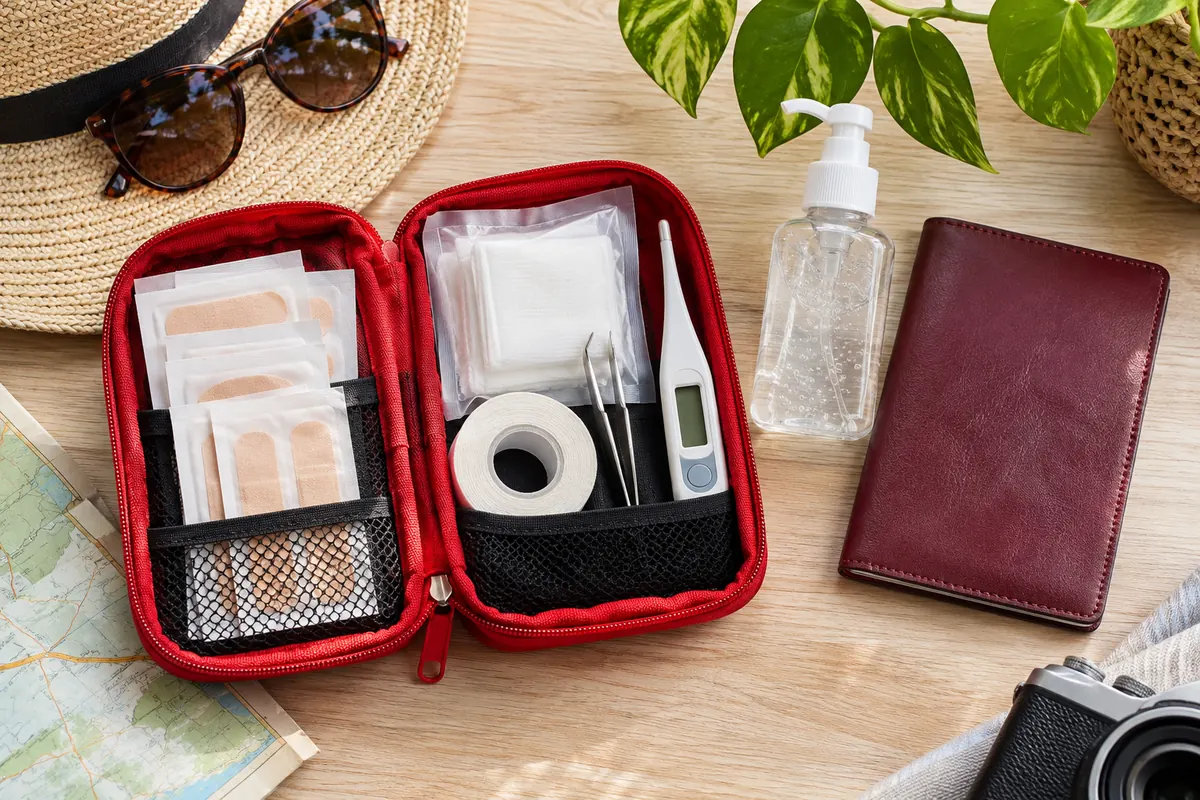
A useful travel first aid kit should answer three questions quickly: where is it, what is inside, and do you know how to use those items? A large bag filled with unfamiliar products can perform worse than a modest pouch organized around your actual needs. The aim is to manage minor problems, support your usual health routine, and help you get appropriate care when something exceeds basic first aid.
Preparing travel first aid kits in Ajax also gives you the chance to ask questions in a familiar setting. You can review medicines with a pharmacist, replace expired supplies, and check equipment before departure. That is easier than trying to interpret unfamiliar packaging late at night in a place where you do not speak the language.
Begin with the journey, not the shopping aisle
Describe the trip in ordinary terms before buying anything. Will you stay in a city hotel near pharmacies, take a remote road trip, join a guided trek, or spend time with relatives? How long could it take to reach medical care? Will you carry all your belongings each day? These details determine what needs to be immediately available and what can remain in your main bag.
The Government of Canada’s travel health kit guidance recommends supplies that support prevention, minor illness and injury care, and ongoing medical needs. Use a checklist as a starting point, then adapt it to your itinerary and the people travelling.
Avoid packing for every imaginable emergency. If an item requires training you do not have, adding it to the bag does not create that skill. A remote trip may justify first aid training, professional guidance, and a stronger evacuation plan. Those preparations can matter more than buying another piece of equipment.
Create a small everyday section
Minor cuts, blisters, and small practical problems are easier to address when the supplies are nearby. Adhesive bandages in a few sizes, gauze, tape, gloves, and an appropriate wound cleanser form a useful starting point. Add blister protection if your trip involves unfamiliar shoes or long walks. Check that you can open the packaging without scissors you may not have with you.
A thermometer can help communicate an illness more clearly, but it needs to work. Test it before departure and check the battery. Keep instructions if the display or controls are unfamiliar. A recorded temperature with a time is more helpful during a telephone conversation than a vague impression that someone feels hot.
Tweezers and small scissors may be useful, but transport rules affect where they can be packed. Review the rules for the specific item and route rather than assuming every tool belongs in hand luggage. Canada’s travel health kit checklist offers a practical inventory to review without requiring every traveller to carry every item.
Make medication the most organized part
Your regular medicines are usually more important than optional first aid products. Bring enough for the trip and discuss an additional supply for plausible delays. Keep essential medication in carry-on luggage and in original labelled containers. A list of generic names helps if a clinician abroad does not recognize a Canadian brand.
Review nonprescription medicines with a pharmacist or clinician, especially if you take other medication, have chronic conditions, are pregnant, or are packing for children. Familiar products can still have contraindications or duplicate ingredients found in another remedy. A combined cold product, for example, may contain ingredients you did not intend to take together.
Do not add leftover antibiotics or another person’s prescription as a general emergency solution. If a travel medicine is recommended, ask what problem it is intended to address, when it should not be used, and what symptoms require medical assessment instead. Written instructions are worth far more than a label remembered imperfectly from a hurried conversation.
Keep instructions beside the relevant item
A kit becomes difficult to use when all the packaging has been discarded to save space. Preserve the information needed for safe use, including ingredient names, expiry dates, warnings, and any personal instructions. A compact paper copy can supplement a phone photograph, particularly when batteries or internet access are uncertain.
For a family kit, clearly identify which products belong to which person. Children’s products should not be distinguished only by bottle colour. Use the original labels and the appropriate measuring device where one is required. Ask the pharmacist to resolve any ambiguity before the kit is closed and placed in the suitcase.
Create an inventory that is short enough to scan. Group supplies by purpose, such as wound care, regular medication, and items for a clinician-discussed illness plan. A travel companion should be able to locate something without unpacking the whole bag onto a station platform or hotel floor.
Think through fluids and stomach illness
Oral rehydration salts can be useful when recommended as part of a travel illness plan. Keep the packets intact and follow their mixing directions using safe water. Different products may require different volumes, so guessing from memory is not a good approach. Include a way to measure the required amount if your route makes that difficult.
Discuss what to do if vomiting prevents you from taking important medication or retaining fluids. The answer may depend on the medicine and your underlying health. People managing diabetes, kidney disease, or other conditions may need individualized instructions for illness rather than a generic suggestion to drink more.
Know the limits of self-care. Blood in stool, severe abdominal pain, significant dehydration, persistent vomiting, high fever, or a child who is unusually sleepy warrants medical advice promptly. The kit is there to support care, not to make every illness manageable without assessment. Write urgent thresholds into the plan when your clinician provides them.
Separate the daily pouch from the reserve
Most travellers do not need the entire kit in their pocket all day. Build a small pouch for essential medication and likely minor needs, then keep reserve supplies securely in the main bag. The division should reflect the itinerary: a full-day boat trip requires different access from an afternoon within walking distance of the hotel.
Do a practical rehearsal. Put the daily pouch in the bag you will actually carry, along with your phone, water, and other essentials. If it is too bulky to take comfortably, revise the organization now. A perfectly stocked kit that stays behind because it is cumbersome will not help during an outing.
If your group separates, do not leave one person responsible for everyone’s essential supplies. Each person who needs immediate access to a prescribed emergency medicine should have an appropriate arrangement discussed with their healthcare team. Companions should know where it is and how to help within their training.
Protect supplies from the journey itself
Heat, moisture, and rough handling can damage medicines and equipment. Read storage instructions and ask about any product requiring temperature control. A parked car, a sunny balcony, or a bag left beside a pool may be unsuitable storage even if the item remains inside its original package.
Use a durable pouch and protect contents from leaks. Separate liquids from paper documents and equipment that should remain dry. Check caps before each transfer. For a beach or boat itinerary, consider how you will prevent the kit from becoming soaked without making it impossible to open quickly.
Do not assume a hotel refrigerator is suitable for medication without checking requirements. If temperature control is medically important, plan with the pharmacist and accommodation provider. Include travel days and power interruptions in that conversation. The requirement does not pause while you wait for a room to become available.
Add information that can change an emergency
Include a concise medical summary, allergies, medication list, insurer details, and an emergency contact. Carry the information in a form someone else can access if you cannot explain it. Protect sensitive information appropriately, but do not make emergency details dependent on a locked device that no companion can open.
Record the local emergency number for each destination and the insurer’s assistance line. A familiar Canadian number is not a universal solution abroad. For remote travel, ask the operator how communication and transport work if there is no mobile signal. A satellite device also requires someone who knows how to use it and keep it charged.
Consider a basic first aid course before a demanding trip. Skills such as recognizing an emergency, communicating clearly, and using common supplies safely are useful across destinations. Training also helps you understand when an improvised response is inappropriate and when professional help should take priority.
Check airport and border requirements separately
Airport security rules and a destination’s medication import rules answer different questions. Passing through Canadian screening does not establish that a medicine is permitted in another country. Check both, including transit countries when relevant, and allow time for any required documents.
CATSA advises keeping medication accessible in carry-on baggage and provides item-specific screening information. Review the current details for liquids, sharps, cooling supplies, and medical equipment rather than relying on an old packing habit. CATSA medication and medical items
For destination requirements and documentation, consult the Government of Canada’s travelling with medication information and the destination authorities. Keep copies of important paperwork with your travel documents, with another accessible backup in case a bag is delayed.
Repack after every trip
An old kit can look ready while containing used-up essentials, expired products, or instructions for a trip you are no longer taking. Empty it before the next journey. Replace missing dressings, test equipment, and remove anything that no longer fits your health needs. Ask a pharmacy about appropriate disposal of unwanted medication.
Write down what was useful and what was repeatedly difficult to find. Those observations help improve the kit without making it larger. Perhaps the blister supplies belonged in the walking bag, or the medication list needed larger print. Small changes based on actual use are more valuable than adding items because they appeared on a very long online list.
Finish with a plan for getting help
Before leaving Ajax, make sure everyone knows the difference between a minor problem the kit can support and a symptom requiring care. Chest pain, breathing difficulty, severe allergic symptoms, confusion, major injury, and rapidly worsening illness need urgent assessment. Do not let the presence of supplies delay calling for help.
A pre-travel consultation can help you match the kit to the route and clarify any recommended medication. Bring your current supplies or a list if you are unsure what to keep. A well-prepared kit is compact, understandable, and close at hand, with a clear route to professional care when its limits are reached.