
April 10, 2025 · 8 min read
Long-Haul Flight Health in Ajax: Prepare for the Whole Travel Day
Prepare for long-haul flights from Ajax with practical guidance on movement, medication access, clot warning signs, sleep, airport assistance and arrival plans.
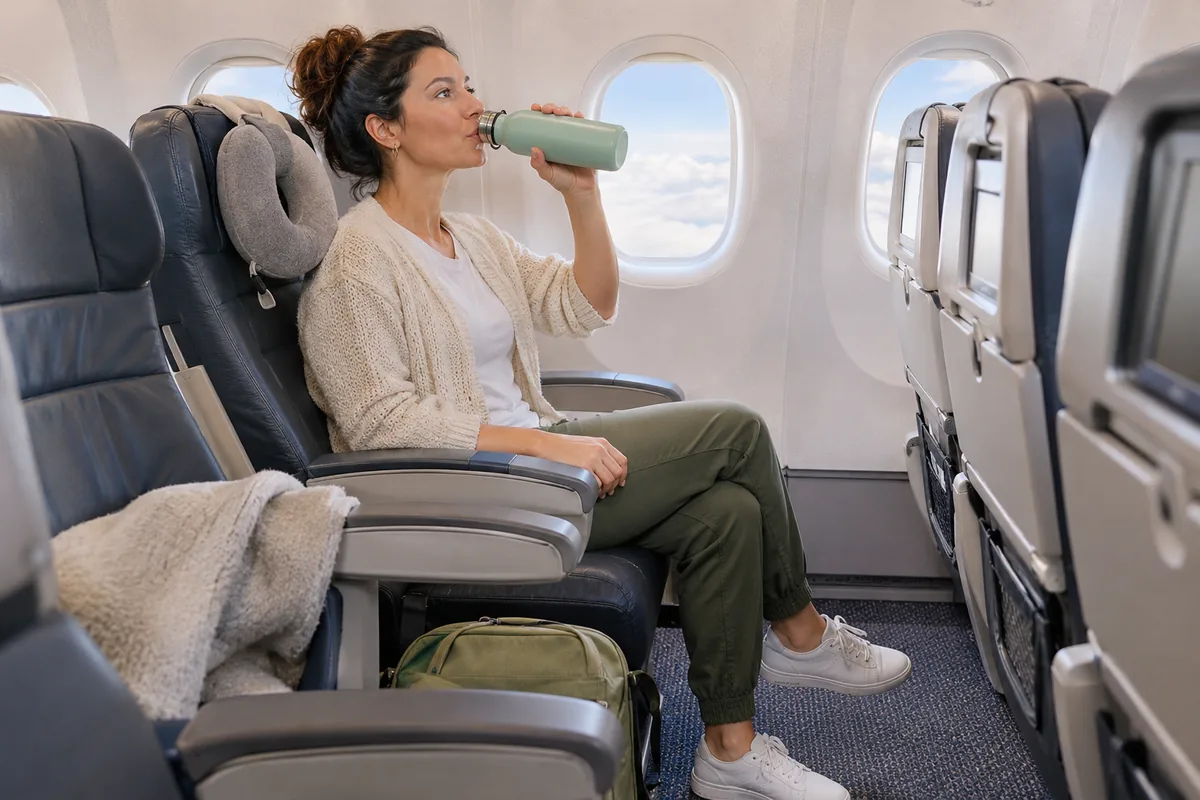
The flight may last ten hours, but the travel day can be much longer. Leaving Ajax for the airport, waiting at the gate, making a connection, and transferring to a hotel all add time away from your normal routine. When planning for comfort and health, count that whole period. Medication, food, movement, and assistance need to work from your front door to your accommodation.
Long-haul flight health in Ajax is therefore a practical planning topic as much as a medical one. Most travellers can make useful improvements with a few decisions made before departure. Some need individual advice because of recent surgery, pregnancy, existing illness, previous blood clots, or medical equipment. Knowing which category applies helps you spend preparation time on what matters.
Build a realistic airport schedule
Leave enough time for the journey from home, check-in, screening, and reaching the gate without rushing. A connection that looks possible on paper may feel very different when terminals are far apart or mobility is limited. Consider the physical demands of the route when choosing flights, not just the ticket price and total scheduled duration.
If assistance would help, request it from the airline in advance and confirm how it works at each airport. Explain what you need in functional terms: help with long distances, boarding, stairs, or moving between connections. A general note on a booking may not communicate every requirement. Keep the confirmation accessible and ask where to report on arrival.
Plan a little redundancy. Have a snack suitable for your needs, necessary medicines, and a way to contact the airline if the itinerary changes. A delayed meal service or missed connection should be inconvenient without leaving you unable to follow a medically important routine.
Understand clot risk without assuming everyone is high risk
Prolonged immobility during travel can contribute to blood clots in the legs. The overall risk is generally small, but personal factors can raise it. Previous clots, recent surgery or injury, some cancers, pregnancy, and certain medications are examples worth discussing before a long journey. Similar concerns can apply to prolonged travel by car, bus, or train.
CDC advises travellers to understand their own risk and move their legs frequently during long trips. Ask your clinician whether you need measures beyond ordinary movement. Do not start aspirin or an anticoagulant for a flight on your own. CDC guidance on blood clots and travel
If compression stockings are recommended, ask about the appropriate type and fit. Buying an arbitrary tight pair at the airport is not the same as receiving individualized advice. Try the recommended stockings before departure so you know how to put them on comfortably and can raise any fit concerns in time.
Make movement possible within cabin safety rules
Keep the area around your feet reasonably clear and avoid packing so much under the seat that you cannot change position. While seated, gently move your ankles and contract your calf muscles as comfortable. CDC suggests walking about every one to two hours on long journeys. On a flight, use that as a reminder to look for a safe opportunity when the seatbelt sign is off and crew instructions permit; never get up during turbulence to meet a schedule.
An aisle seat may make movement and washroom access easier for some travellers. It is not a medical guarantee, and it may not suit everyone, but seat choice can support the routine you intend to follow. Consider how often you need to reach belongings and whether a companion can help without repeatedly lifting a heavy bag.
Follow cabin crew instructions during turbulence and keep your seatbelt fastened when seated. Movement should never mean walking around when it is unsafe. Use safe opportunities during connections as well: a gentle walk through the terminal can break up another long seated period if your health and mobility allow it.
Know symptoms that need urgent attention
New swelling, pain, warmth, or redness in one leg can require prompt medical assessment. Sudden shortness of breath, chest pain, coughing blood, or fainting can signal a pulmonary embolism and require emergency help. Symptoms can appear after the flight as well as during it. Do not dismiss them as ordinary jet lag or a pulled muscle without assessment.
If concerning symptoms begin on board, tell the cabin crew immediately. After arrival, use local emergency services for emergency symptoms rather than waiting until the trip ends. Mention recent long-distance travel and any known clot risk factors. CDC’s traveller information on deep vein thrombosis explains the distinction between leg clots and a clot affecting the lungs.
Save emergency contact information before leaving home. A travel companion should know your relevant medical history and where your medication list is located. The purpose is to make communication faster if needed, not to monitor every normal ache as though it were a crisis.
Keep essential medication in reach
Pack regular medication in carry-on baggage, using original labelled containers. Think about access during the flight as well as avoiding lost luggage. A medicine needed at a specific time should not be buried beneath a heavy case in an overhead locker you cannot safely reach.
Ask your pharmacist or prescribing clinician how to manage time zones. The correct plan depends on the medicine; some routines are flexible, while others require careful timing. Write the agreed schedule with clear time-zone labels. A reminder that switches automatically to local time can create confusion if you have not decided what it should represent.
Review cooling needs, batteries, sharps, and medical-device requirements with the relevant professionals and airline. Airport screening rules are separate from airline operating policies and destination import rules. CATSA’s medication and medical items guidance is a useful Canadian starting point for the screening portion of that planning.
Plan fluids and meals around your needs
Carry a refillable bottle where permitted and drink regularly according to your usual health advice. If you have a condition requiring fluid restriction, ask your clinician how to manage the journey. Drinking water supports comfort, but it does not replace movement or medically recommended clot prevention.
Alcohol can complicate sleep, judgement, and medication use. Consider limiting or avoiding it, particularly if you are taking a medicine that causes drowsiness. Ask about interactions before travel. Do not combine a new sleeping product with alcohol in the hope of making the flight pass more quickly.
Meals may arrive at inconvenient times, and special meals can occasionally be unavailable despite being requested. Pack suitable backup food within security and destination rules. Travellers with diabetes, serious food allergies, or other dietary needs should have a specific plan rather than depending entirely on the standard service schedule.
Treat sleep as a schedule problem
Jet lag reflects the mismatch between your internal clock and the destination time zone. A dark cabin can help with rest, but it does not instantly reset that clock. Think about the arrival time, the direction of travel, and what you must do after landing before deciding when you hope to sleep.
CDC describes strategies involving sleep schedules, light exposure, and appropriate timing. Medication or melatonin is not suitable for every traveller, and timing matters. Seek individual advice if you are considering these options, particularly when other medicines or health conditions are involved. CDC jet lag guidance
Simple comfort items can make rest easier: an eye mask, earplugs, a light layer, and a support that fits your seat. Test them at home instead of discovering that a new travel pillow is uncomfortable after boarding. Keep expectations realistic. A few periods of rest may be more achievable than a perfect night’s sleep.
Reduce avoidable exposure and discomfort
Wash your hands before eating and after using the washroom. Carry hand sanitizer for times when washing is not available, and avoid touching your face unnecessarily. A well-fitting mask can be useful in crowded indoor travel spaces, particularly for someone with increased vulnerability or when respiratory illness is circulating.
Consider your own symptoms before flying. If you are acutely ill, seek advice and check airline requirements instead of assuming the journey must proceed unchanged. Planning flexibility and understanding cancellation arrangements can make responsible decisions easier. Bring tissues and a bag for used items so simple hygiene remains manageable in a confined seat.
Comfort also depends on ordinary details: layers for changing cabin temperatures, shoes that accommodate normal variation in foot comfort, and glasses if contact lenses become uncomfortable. Avoid introducing multiple unfamiliar products on the flight. Use things you already know you tolerate whenever practical.
Arrange the first hours after landing
A demanding arrival can undo much of the preparation for the flight. Consider booking straightforward transport, allowing time to obtain food, and avoiding an immediate long drive when exhausted. If you must drive, assess whether you are alert enough to do so safely and arrange an alternative when needed.
Build a modest first day into the itinerary when possible. An important meeting, strenuous hike, or complicated onward transfer leaves little room for delays or fatigue. Tell companions in advance if you need a slower start. Agreeing on expectations at home is easier than renegotiating them while everyone is tired at baggage claim.
Keep necessary medicines and documents accessible until you reach the room. The journey is not finished when the aircraft door opens. Immigration queues and ground transport may add several more hours, especially when a connection or hotel check-in does not proceed as expected.
Get personal advice when the situation is not routine
Recent illness, an operation, unstable symptoms, or the need for oxygen should prompt a medical discussion before flying. The airline may have documentation or equipment procedures, and the treating clinician may need time to assess whether the itinerary is suitable. Do not leave those conversations until the final week simply because the ticket is already booked.
A travel health consultation can connect flight preparation with the destination’s health needs. Bring the full itinerary, medical history, and a list of medicines or devices you will carry. Review Canada’s in-flight safety information for the operational side of the journey. With a workable plan from Ajax to your final accommodation, the flight becomes one manageable part of the trip rather than the only part you prepared for.