
July 30, 2025 · 9 min read
Freshwater Swimming Safety for Travel in Ajax: Read the Setting
Prepare for freshwater activities from Ajax by understanding local swim warnings, infection risks, weather changes and the details to share after exposure.
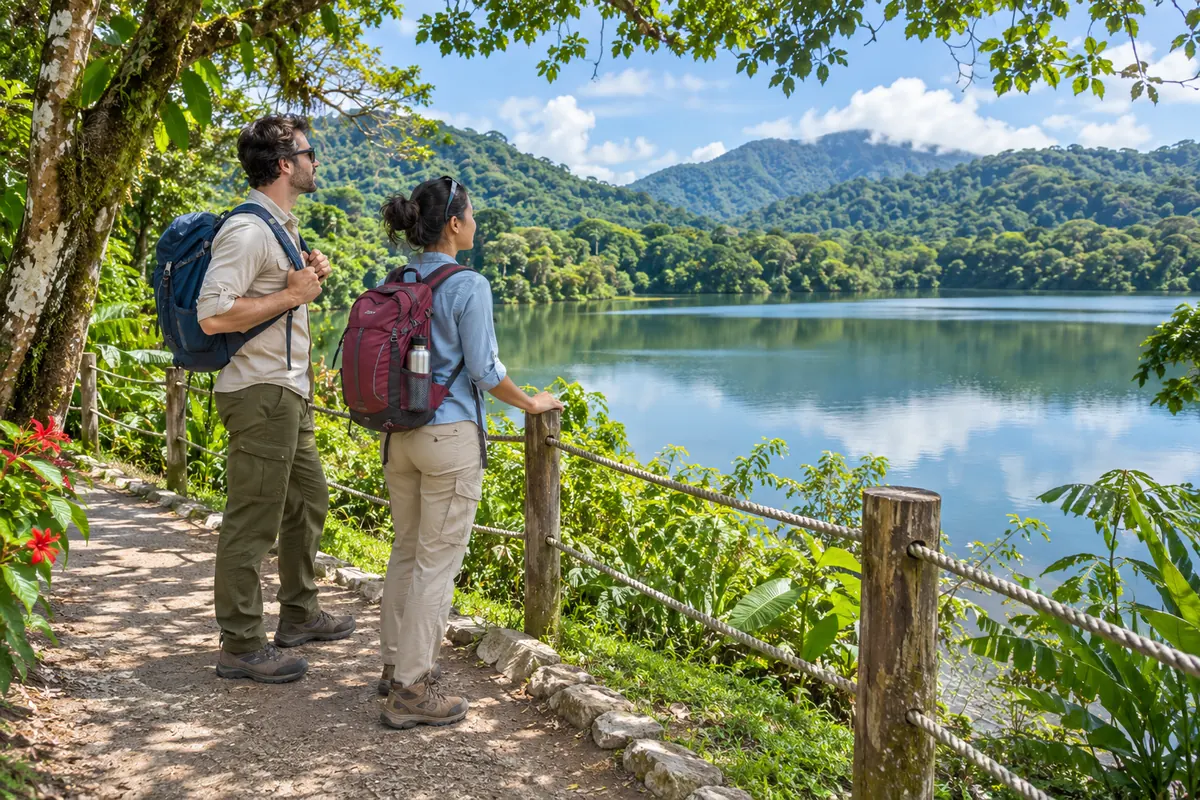
A waterfall photograph rarely shows the information that matters most before entering the water. It cannot tell you what happened upstream after last night’s storm, whether the area is monitored, or whether a parasite occurs in the region. Clear water and a busy swimming spot can feel reassuring without answering any of those questions.
Freshwater swimming safety for travel in Ajax begins with the exact activity and location. A paddle on a monitored Ontario lake, a river swim during a tropical holiday, and a day of canyoning are different exposures. Knowing the difference lets you choose activities with confidence and decline unsuitable ones without making the decision under pressure at the water’s edge.
Put the actual water activity on your itinerary
Write down the name of the lake, river, waterfall, or adventure route when you know it. Add whether the activity involves swimming, wading, rafting, jumping, or simply riding in a boat. Even a trip advertised as a scenic boat excursion may involve an optional swim or a landing that requires walking through shallow water. Ask the operator about those details before booking.
Find out whether there is a practical way to participate without entering the water. A walking trail, viewing platform, or separate boat boarding point may allow everyone to enjoy the outing. If an activity depends on immersion, recognize that declining it may be the sensible choice for a particular destination or health condition. Having an appealing alternative reduces the feeling that a health precaution has removed the whole day’s entertainment.
Treat a local recommendation as one piece of information. A guide may know currents and access routes very well while having little knowledge of travel-associated infections. A health professional may understand infection risks but need your operator’s details to assess the exposure. The CDC’s natural-water safety advice explains why both water quality and personal health belong in the decision.
Ask about accidental immersion as well as planned swimming. A canoe outing, raft landing, or river crossing can put you in contact with freshwater even when you intend to remain dry. Find out how participants enter and leave the craft, whether capsizing is a realistic possibility, and whether the route passes through areas where contact should be avoided. Saying that you will skip the optional swim may not address the exposure created by the rest of the excursion.
Keep the operator’s exact route description with your itinerary. Some tours use a familiar regional name while visiting several different bodies of water. If you later need medical advice, identifying the particular river or lake can be more useful than naming the nearest city. Ask for that information before the outing, when it is easy to obtain, rather than trying to reconstruct the route from photographs after everyone has returned home.
Consider the return transfer when comparing outings. A route that leaves you wet for a long drive can create a separate comfort and temperature problem, even after a brief activity. Ask where dry clothing can be stored and changed, and whether bags remain accessible. Those details are particularly useful for children and anyone who needs assistance dressing or getting in and out of a vehicle.
Recognize when schistosomiasis changes the answer
Schistosomiasis is caused by parasites that can enter through the skin during contact with contaminated freshwater in affected regions. Swallowing water is not required. The CDC’s schistosomiasis guidance recommends avoiding swimming, bathing, and wading in freshwater where the disease occurs. A brief dip or an attractive swimming area does not reliably remove that risk.
Bring the specific destination to a pretravel discussion instead of asking whether “Africa” or “Asia” is safe for swimming. Risk depends on local transmission, and an answer about one country or region may not apply elsewhere. Do not interpret a friend’s uneventful holiday as proof that an exposure is harmless. Infections do not always announce themselves immediately or affect every person who enters the same water.
Shoes, a towel, or a quick rinse afterwards are not a dependable prevention plan for schistosomiasis exposure. Avoid relying on an operator’s promise that fast-moving water, a particular time of day, or a short swim makes the activity safe. If freshwater contact is advised against, choose an alternative activity. Properly maintained treated pools and saltwater settings have different considerations, which still include ordinary swimming safety.
Reconsider freshwater plans after heavy rain
Rain can change a swimming area in ways that are not visible from shore. Runoff may carry waste into the water, currents can strengthen, and access paths can become unstable. Check current local information on the day of the activity. An online review from the previous season does not establish today’s conditions, and a tour that ran yesterday may be inappropriate after an overnight storm.
Leptospirosis is one infection associated with water or soil contaminated by the urine of infected animals. The CDC’s traveller guidance on leptospirosis identifies freshwater recreation and exposure after heavy rainfall or flooding as relevant risks. Avoid potentially contaminated water and discuss unusual occupational or adventure exposures with a clinician. Preventive medicine, when considered in selected circumstances, is not a general permission slip to enter unsafe water.
Ask a rafting or canyoning operator how weather decisions are made. Who reviews upstream conditions? What happens if a route is closed? Is there a refund, postponement, or land-based alternative? Those questions are easiest to settle before payment. If staff cannot explain the cancellation process, the uncertainty belongs in your assessment of the operator, even if the photographs and customer reviews look appealing.
Look for advisories without assuming silence means safety
Check the local authority responsible for the recreation area, then read signs at the site. Some locations publish recent testing results, while others have little or no routine monitoring. The absence of a sign may mean nobody has assessed the water. Ask whether the site is monitored, rather than only asking whether it is currently closed.
Unusual discolouration, scum, foam, or a strong unpleasant smell are reasons to stay out and seek local guidance. The CDC’s harmful algal bloom information explains that blooms can affect people and animals and that advisories should be checked. Do not let children or pets explore suspect water while adults debate whether the appearance is normal. Choose another location when there is doubt.
Keep your own water supply separate from recreation plans. A lake can be unsuitable for drinking even when swimming is permitted, and a portable bottle filter does not make all water-related activities safe. Our safe drinking water planning guide addresses treatment and storage as a separate task. Filling a bottle, bathing, and swimming involve different decisions rather than one universal judgment about the water.
Keep warm freshwater out of your nose
Naegleria fowleri is associated with a rare but severe infection when contaminated water enters the nose. The CDC’s prevention advice for swimming discusses precautions during activities in warm freshwater, including keeping water out of the nose and avoiding disturbance of sediment in shallow warm water. It is a different problem from ordinary stomach illness caused by swallowing contaminated water.
Consider whether a planned activity forces water into the nose, particularly jumping, diving, or vigorous underwater play. Talk with children beforehand about the chosen boundaries instead of trying to explain them from shore after the game has started. A calm discussion about what the family will do is more workable than a vague instruction to “be careful” around an exciting new swimming area.
These precautions do not replace destination-specific advice about other infections. A nose clip does not protect against parasites that enter through the skin, and avoiding swallowing does not eliminate wound exposure. Evaluate the whole activity. If the safest recommendation for a particular body of water is to avoid contact, modifying one small part of the swim does not make that recommendation irrelevant.
Treat drowning prevention as a separate responsibility
Water that presents little infectious risk can still be dangerous because of depth, currents, cold, submerged obstacles, or boat traffic. Choose designated swimming areas with appropriate supervision where possible. Use properly fitted lifejackets for relevant activities, follow the operator’s instructions, and avoid alcohol around swimming or boating. Strong swimming skills at home do not remove the hazards of an unfamiliar river.
For children, assign an attentive adult to supervise and make the handover explicit when responsibility changes. A group of adults nearby is not the same as one adult actively watching. Ask where the emergency equipment is and how help is called. The CDC’s healthy and safe swimming overview treats injury prevention and infection prevention as complementary parts of water safety.
Do not jump from a ledge because others have done so. Water level, submerged objects, and entry conditions can differ from what a video suggests. If a planned excursion includes jumps or difficult exits, ask about alternatives and the minimum physical ability required. Tell the operator about limitations early enough for an honest discussion of whether the activity is suitable.
Protect wounds and consider individual health needs
An open cut, recent operation, fresh piercing, or incompletely healed tattoo deserves attention before swimming. Natural water can introduce organisms into damaged skin. The CDC’s swimming-illness prevention guidance advises precautions around wounds and emphasizes staying out when ill with diarrhea. A waterproof dressing has limits and does not guarantee that every wound can safely be immersed.
People with reduced immune function or other relevant health conditions should ask their own clinician about swimming plans. Give the clinician the actual setting and activity, including remoteness and access to care. A question about a hotel pool may receive a different answer from a question about a muddy river race. Avoid reducing all of those settings to the single word “swimming.”
Pack footwear appropriate for the terrain and supplies for ordinary wound care, while remembering that equipment does not override a reason to avoid the water. Inspect feet and skin after outdoor activities, especially if sensation is reduced. Seek assessment for increasing redness, swelling, pain, drainage, or systemic illness instead of repeatedly covering an evolving problem and continuing the itinerary.
Record an exposure without trying to diagnose yourself
If you enter freshwater unexpectedly, write down the date, location, activity, and approximate duration. Note any broken skin, swallowed water, recent flooding, and symptoms that follow. A photograph of the site sign or the operator’s route description may help identify the location later. These notes can be useful even when you feel entirely well at the time.
Tell a clinician about the exposure if you become ill during or after travel, and ask whether follow-up is appropriate after contact in a schistosomiasis-endemic area. The right tests and their timing depend on the organism and circumstances; an immediate negative result does not answer every question. Do not buy medication online or borrow someone else’s prescription as a substitute for an assessment.
Seek urgent medical attention for severe headache with fever, neck stiffness, confusion, breathing difficulty, or other serious illness, and mention recent freshwater contact immediately. For less urgent symptoms, bring the exposure record to your appointment rather than relying on memory weeks later. Our post-travel health guide can help organize the broader travel history. A thoughtful swimming plan includes both the decision to enter the water and the information needed if something changes afterwards.