
July 3, 2025 · 9 min read
Epilepsy and Travel in Ajax: Keeping Treatment and Safety Plans Together
Prepare for travel with epilepsy from Ajax by reviewing medicine timing, seizure action plans, sleep, companion support and access to urgent care abroad.
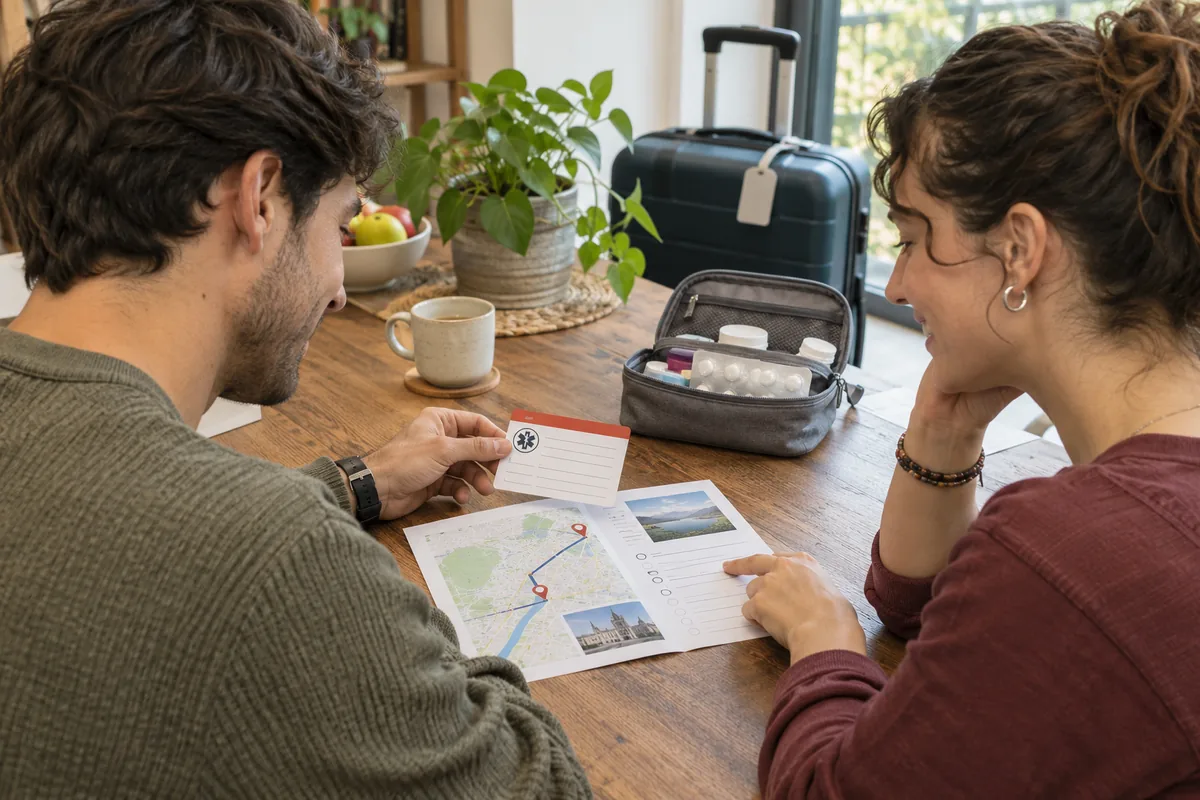
The most useful travel preparation for someone with epilepsy often happens at the kitchen table. A flight itinerary sits beside a medication list. A companion asks what a usual seizure looks like. Someone notices that an overnight connection would mean very little sleep. These small observations can lead to changes that make a journey easier to manage before departure becomes urgent.
Epilepsy and travel in Ajax calls for a plan based on the person’s seizure history, treatment and chosen activities. There is no single travel rule that fits everyone with the diagnosis. A person who has been stable for years may have different needs from someone adjusting to a recent medication change. The treating epilepsy team should help decide what those differences mean for the proposed trip.
Explain the trip in terms your epilepsy team can assess
Bring the route, departure times, connection lengths and planned activities to the appointment. Explain whether you will travel alone, share a room, swim, drive or visit places far from medical care. Describe recent seizures accurately, including changes that might feel minor compared with a previous major event. If treatment has changed, ask whether there should be a review before committing to an inflexible itinerary.
The Epilepsy Foundation’s travel planning resource encourages preparation around individual seizure experiences. Translate that into practical choices: a direct flight may remove a difficult overnight layover, while a day at the arrival destination may create space to recover before a remote excursion. Bring uncertainty into the conversation too. A trip with several possible routes needs advice about which changes should trigger another call to the care team.
Write down what other people need to recognize
Seizures do not always look like the convulsive episodes commonly shown on television. Ask the treating clinician to help describe your typical events in plain language. Include what happens before, during and afterward, how long recovery usually takes and which changes would be unusual. A companion needs information they can recognize in a crowded airport, not only a diagnostic name.
Update a written seizure action plan before travel. It should explain routine treatment, first aid, any prescribed rescue medicine and the circumstances requiring emergency services. The Epilepsy Foundation’s action-plan guidance offers a structure to discuss with your clinician. Keep the completed version accessible offline and provide a copy to the person who may need to act. Review it together rather than assuming that handing over a document is enough preparation.
Make medication timing a separate appointment question
Time zones can turn familiar instructions into a puzzle. Ask the prescriber or pharmacist to produce a specific schedule for the outward journey, the stay and the return. Record local times and the date where a journey crosses midnight. A phone alarm may change automatically when the device enters a new time zone, so understand what the alarm is actually measuring before relying on it.
Do not skip doses, double up or move several doses close together to make the clock look tidy. Ask what to do if a dose is missed or vomited and when medical advice is needed. The Epilepsy Foundation’s preparation guidance discusses medication and sleep planning for travel. Take the written schedule to the airport with the medication itself. A careful plan left in a suitcase at home cannot resolve confusion during a delayed connection.
Check border rules for every medicine you carry
Regular antiseizure treatment and rescue medication may be subject to different import rules. Check with the destination’s official authorities, including any country where you clear immigration during transit. Ask about quantity limits, permits and supporting letters. A prescription issued in Ontario does not automatically authorize possession in another country, and medication packaging alone may not satisfy entry requirements.
Canada’s travelling with medication guidance is a useful starting point. Give yourself time to obtain documents and keep the names of active ingredients on your medication list. If a permit cannot be obtained, discuss the situation with the treating clinician before changing plans or treatment. Do not solve a customs problem by removing labels or concealing a medicine. Carry the relevant written confirmations where you can retrieve them during inspection.
Pack for access, temperature and an ordinary delay
Keep essential medicines in your cabin bag with original labels and a copy of the prescription information. Ask the pharmacist about a reasonable extra supply within legal limits. Check storage requirements for each product, including rescue medicine, and avoid leaving medication in a hot vehicle or in luggage that may be separated from you for hours.
Think about the smallest bag you carry during a day trip. If every medicine stays in the hotel, your carefully prepared plan may be unavailable precisely when needed. Agree who carries the rescue supply and who checks it before leaving. The person carrying it must also know the action plan. For someone who travels independently, consider how medical identification and an emergency contact card can communicate essential information if speaking becomes difficult after an event.
Teach first aid in a calm setting
Have companions review seizure first aid before the trip. During a convulsive seizure, protect the person from nearby hazards, time the event, cushion the head where possible and turn them onto their side when this can be done safely. Do not restrain them, put anything in their mouth or offer food, drink or pills while they are not fully alert. The CDC’s seizure first-aid guidance provides an accessible reference.
Call the local emergency number for a seizure lasting longer than five minutes, repeated seizures without recovery, breathing difficulty, serious injury or an event in water; follow any earlier emergency threshold in the personal plan. A first seizure also needs urgent assessment. If rescue medicine is prescribed, a trained companion should use it only as directed. Giving rescue treatment does not cancel an instruction to summon emergency help.
Protect sleep before departure as well as after landing
Travel-related sleep loss often begins the night before the flight, when packing continues late and the alarm is set before dawn. Finish essential preparation earlier and consider whether a different departure time would reduce disruption. Plan who will handle late-night paperwork, airport driving and the first day of errands so those jobs do not all fall on the traveller with epilepsy.
At the destination, leave some flexible time before early tours or late celebrations. Tell companions in advance if protecting sleep means skipping part of an event. Ask the clinician about safe ways to manage the schedule and whether any sleep products should be avoided with your medicines. Do not experiment with a sedative, supplement or borrowed tablet on the aircraft. A sleep plan should support treatment rather than introduce another uncertain medication into the journey.
Match activities to your actual seizure risk
Swimming, boating, climbing and other activities deserve their own discussion. Ask the epilepsy team what supervision or restrictions are appropriate for you. A friend who happens to be nearby may not provide the same protection as a companion who understands the risk and is actively watching. Tell activity providers what they need to know to implement agreed precautions.
Driving requires separate attention to medical advice, licensing rules and destination law. Do not assume a rental booking or a valid-looking licence settles eligibility. Consider how you will get around if driving is not an option: airport transfers, accommodation location and group plans may all need adjustment. Discuss these arrangements before paying deposits. The goal is to choose enjoyable activities whose safety arrangements can actually be carried out, rather than depending on reassurance at the booking desk.
Ask about interactions before adding travel treatment
Bring a complete medication list to the travel consultation, including nonprescription products and supplements. Some medicines used for malaria prevention or other travel concerns may be unsuitable with a seizure disorder or may interact with ongoing treatment. The clinician should consider both the destination risk and the epilepsy history rather than selecting a standard package from a country list.
Ask how to handle illness that interferes with keeping medicine down and where to seek care if vomiting continues. Keep this instruction distinct from a general diarrhea plan. If a clinician abroad proposes a new medicine, show the current list and explain the seizure disorder before taking it. Our prescription medication travel guide covers the broader packing and documentation questions that support this more individual medication review.
Arrange help without surrendering your privacy
Decide which people need information and how much they need. A travel companion may need the full action plan, while a tour organizer may only need emergency instructions and relevant activity restrictions. You do not have to explain your entire medical history to every person you meet. Clear, purposeful disclosure can improve support while preserving dignity.
Identify a place to obtain urgent care at each overnight location and keep emergency numbers offline. Ask the insurer specifically about epilepsy, recent events and treatment changes, and request written clarification of coverage. Avoid relying on a general promise that all medical emergencies are covered. If travelling alone, agree on realistic check-ins with someone at home and explain what they should do if a check-in is missed, allowing for ordinary network problems and time differences.
Plan for the period after a seizure
First aid is only part of the practical response. Ask your clinician what support you usually need during recovery and how a companion can distinguish that pattern from a change requiring urgent assessment. Someone may need quiet reassurance, privacy and help understanding what happened. An unfamiliar airport can make that period especially confusing when announcements continue and strangers ask questions.
Agree that your companion will explain the situation to transport staff, protect your privacy and avoid pressuring you to make immediate itinerary decisions. They should know where the care plan is and how to contact help. If a seizure affects onward travel, obtain appropriate medical advice instead of treating a boarding deadline as the deciding factor. Keep enough flexibility to arrange a place to recover when the treating clinician says that is appropriate.
If you do not speak the destination’s language, have a short explanation of the condition and emergency instructions translated accurately before departure. Keep it separate from the full medical record so someone can quickly understand its purpose. Review the wording with your care team where possible, especially if it describes rescue treatment. A translation should support the personal action plan, and should not introduce new treatment instructions or imply that every seizure is harmless.
Use a rehearsal to find the weak point
A few days before departure, walk through one realistic disruption. Imagine that the flight is delayed overnight and your checked bag is unavailable. Can you find the medication schedule, legal paperwork, next dose, rescue plan and emergency contact without a network connection? Does your companion know where each item is? This exercise often reveals a simple access problem that buying more supplies would not fix.
After the trip, note any seizures, missed treatment, unusual recovery or care received abroad and share relevant details with the epilepsy team. For destination-related advice, book a travel consultation while continuing to involve the clinician who manages your epilepsy. A reliable plan combines those roles: the travel appointment addresses the route and exposures, while the epilepsy team guides seizure treatment and individual safety decisions.