
May 22, 2025 · 9 min read
Dengue Prevention for Travel in Ajax: Protect the Whole Day
Plan dengue precautions from Ajax with guidance on daytime mosquito bites, room checks, vaccine questions, warning signs and getting help during travel.
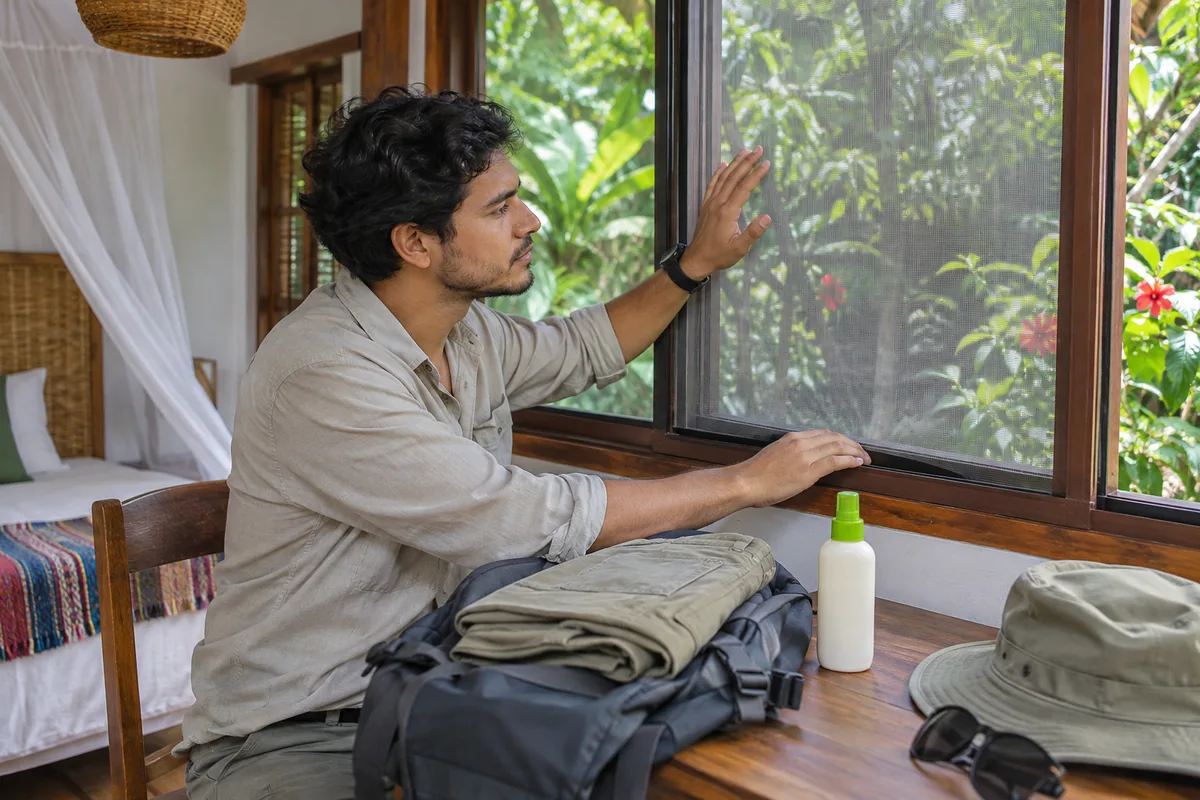
Mosquito precautions are easy to associate with an evening outside. Dengue planning needs to cover breakfast on a terrace, a midday market visit, and a quiet afternoon in an open guesthouse as well. The mosquitoes that spread dengue can bite during the day, so a routine that starts only at sunset leaves gaps during ordinary holiday activities.
Dengue prevention for travel in Ajax is largely about preparing for those everyday moments. Check the places you will visit, choose practical bite protection, and know how to respond if fever develops. A useful plan does not depend on seeing a mosquito or remembering a frightening headline. It gives you repeatable habits and a clear way to get medical help when needed.
Look closely at the places on your route
Dengue risk varies within countries and over time. A broad destination label may hide differences between cities, islands, and regions, while local outbreaks can change the picture. Review the Government of Canada’s destination information and dengue travel health notice before departure. Discuss the actual route and dates rather than relying on what a friend experienced several years ago.
List all overnight stops, including visits to relatives and short side trips. Add how you will spend your days: indoor meetings, walking tours, outdoor work, or extended stays in accommodation with open windows. These details help turn a general conversation about risk into a practical discussion about the protection you can maintain.
A short trip still deserves preparation. Duration is one consideration, but it does not tell you whether exposure will occur. Equally, a comfortable resort is not a reason to abandon precautions. Ask about room screens and air conditioning rather than assuming a property’s price or star rating answers those questions.
Build protection around a normal travel day
Think through tomorrow from the moment you get dressed. Where will repellent be kept? Will you have long sleeves available for an outdoor activity? Will a change of clothes after swimming leave you without the supplies you need? These small questions expose gaps that a generic packing checklist can miss.
Choose breathable clothing you can tolerate in the expected weather. Long sleeves and trousers are more useful when they fit comfortably and are easy to wear. If a tour leaves before breakfast, set out the clothing and repellent the night before. If family members separate for different activities, each group needs access to its own supplies.
The CDC’s dengue prevention guidance recommends preventing bites throughout travel, using suitable repellent and clothing, and choosing accommodation with effective screens or air conditioning. Mosquitoes can bite during both day and night. A bed net can help when a protected room is unavailable or when sleeping outdoors, but it does not cover the hours spent awake elsewhere.
Read the repellent label before you need it
Buy a Health Canada-authorized product suitable for the people using it. DEET and icaridin are familiar options, but age restrictions, application instructions, and duration vary by product. Follow the label rather than copying how another traveller uses a different bottle. If you have questions about pregnancy, a child’s age, or a skin condition, ask a healthcare professional before leaving.
Use separate sunscreen and repellent products, applying sunscreen first and repellent afterward. Reapply according to each label rather than assuming their schedules match. Avoid spraying directly onto the face; follow the product’s application directions carefully. Canada’s insect bite prevention advice explains these application steps alongside other protective measures.
Pack enough for the anticipated activities and check transport requirements for the container. Keep one accessible supply with day-trip essentials. Sharing a single bottle between several hotel rooms often sounds efficient until people depart at different times. A small amount of planning makes consistent use easier without turning every outing into a discussion about where the repellent went.
Check supplies again before moving to a smaller town or island. If something is running low, replacing it while you have familiar shops nearby may be easier than searching after the next transfer.
Check the room before unpacking completely
When you arrive, look at the window and door screens and notice whether they close properly. If you find a damaged screen or a door that will not shut, raise the problem while moving rooms is still straightforward. Ask staff how to use the air conditioning and whether electricity remains available when you leave the room.
Arrange the room around how you will actually use it. A balcony door left open while everyone gets ready can undermine the benefit of a screened room. Put reminders where they help: repellent with sunglasses, a light shirt beside the day bag, and the room key near the door. These are ordinary organisational choices, but they help protection continue when people are tired or distracted.
For longer stays, discuss containers holding standing water around the accommodation with the host or property staff. Avoid making changes to unfamiliar equipment or water storage without permission. The useful conversation is about who maintains the property and how concerns are reported, especially when you are staying in a private rental rather than a staffed hotel.
When visiting relatives, explain your preparations as part of your travel routine. A host may be trying to make you comfortable by opening windows or arranging meals outdoors, without knowing the plan you discussed before leaving. You can appreciate that hospitality while asking about a screened room or bringing suitable clothing to an outdoor gathering. Pack your own supplies so the request does not become an unexpected shopping task for someone else. If several households share the visit, keep a small bag ready for overnight changes. The easier it is to carry your routine between homes, the less you will need to renegotiate it at every stop.
Understand what Canadian vaccine guidance says
Canadian guidance states that no dengue vaccine is authorized and available in Canada. QDENGA is authorized in some other jurisdictions, which can create confusing messages when travellers encounter overseas advertising. Availability in another country does not establish that vaccination is appropriate for a particular Canadian traveller.
The Committee to Advise on Tropical Medicine and Travel recommends against QDENGA for Canadian travellers without documented laboratory-confirmed prior dengue infection. It allows consideration in some travellers with documented previous infection following an individual assessment. The decision includes exposure, health factors, potential benefits, uncertainties, and the required schedule. Review the Canadian recommendations on QDENGA in jurisdictions where it is authorized with a qualified clinician.
An unexplained fever on a previous holiday is not the same as a confirmed dengue diagnosis. Bring actual laboratory records if you have them. Do not build an itinerary around obtaining a vaccine after arrival without a proper assessment beforehand. Whatever advice you receive about vaccination, keep the mosquito prevention plan in place throughout the trip.
Bring earlier illness into the conversation
If you have previously been diagnosed with dengue, mention it when arranging travel advice. A second infection can carry a greater risk of severe disease, although severe illness can also occur with an initial infection. Previous dengue does not provide a simple guarantee of protection against every future infection. The World Health Organization’s dengue fact sheet explains this concern.
Gather discharge notes, test results, and a brief description of your recovery rather than trying to recall the details during an appointment. Include other relevant conditions and regular medicines. If you are travelling with someone who would help you when ill, decide which essential information they can access and where you will store it.
The discussion should also consider how easily you could obtain care at each stop. A prolonged stay far from a hospital creates different practical challenges from accommodation near established services. You may decide to change one remote segment, arrange more flexible transport, or identify a local medical contact before arriving.
Make a plan for fever before fever happens
Fever during or after travel deserves medical attention, particularly after visiting an area where dengue or malaria occurs. Dengue can cause headache, body aches, nausea, and rash, but symptoms alone cannot reliably distinguish it from other infections. Tell the clinician where you travelled and when symptoms started. The CDC Yellow Book chapter on dengue describes why itinerary and timing matter to assessment.
If the route included an area where malaria occurs, seek immediate medical assessment for fever and mention that exposure explicitly. Do not assume dengue is the explanation or wait until the return flight. Taking malaria prevention medicine does not rule out infection. CDC advice for travellers exposed to malaria makes this urgency clear.
Save the location of an appropriate medical facility and your insurer’s assistance details before an excursion. Check how you would reach care at night or from an island. If you are travelling alone, decide whom you would contact if you became too unwell to manage transport and bookings. A named person and a saved number are more useful than a vague intention to ask someone later.
If symptoms begin after returning to Ajax, include the trip in the first conversation with the healthcare provider. Do not assume it is irrelevant because the holiday has ended. Keep the dates and locations accessible until you are settled back into your normal routine, especially if you visited several countries.
Recognize deterioration even when the fever settles
Severe abdominal pain, repeated vomiting, bleeding, unusual drowsiness or restlessness, breathing difficulty, or marked weakness need urgent medical care. A falling temperature does not always mean recovery; warning signs of severe dengue can appear as fever resolves. Do not wait for every symptom or for a travel companion to agree that the illness looks serious.
For suspected dengue, avoid aspirin and anti-inflammatory pain relievers such as ibuprofen unless a treating clinician gives specific instructions, because they can increase bleeding risk. Ask about an appropriate fever medicine and safe use in your circumstances. Do not independently stop prescribed medicines, including a regular blood thinner; seek prompt individual advice. CDC guidance on managing dengue explains warning signs and supportive care.
If a clinician advises care outside hospital, obtain clear instructions about follow-up, fluids, medication, and when to return immediately. Make sure the instructions are understood by whoever is helping you. A hotel room is a difficult place to interpret an unclear plan while someone is vomiting or becoming weaker, so clarify practical details before leaving the medical facility.
Keep prevention going during recovery
Continue avoiding mosquito bites while ill. A mosquito that bites someone with dengue can become infected and contribute to further transmission. Use the protection advised by your treating team, including appropriate room measures. If another person is buying supplies or moving your luggage, remind them where the repellent and protective clothing are packed.
Recovery can affect the rest of the itinerary. Ask your clinician about travel plans and do not treat a prepaid excursion as a reason to ignore ongoing symptoms. Contact the insurer or booking provider with medical documentation when appropriate. Keep records of assessments and medicines so that follow-up at home does not depend on memory.
Before departure from Ajax, bring destination details and vaccine records to a travel health consultation, and use the broader mosquito bite prevention guide to organise supplies. The useful outcome is a plan you can follow during ordinary days, together with a clear response for the unusual day when someone becomes ill.