
July 21, 2025 · 10 min read
CPAP and Sleep Apnea Travel in Ajax: Keeping Night-Time Treatment Working
Prepare for CPAP travel from Ajax with practical checks for airline approval, power, batteries, humidifier care and equipment support at your destination.
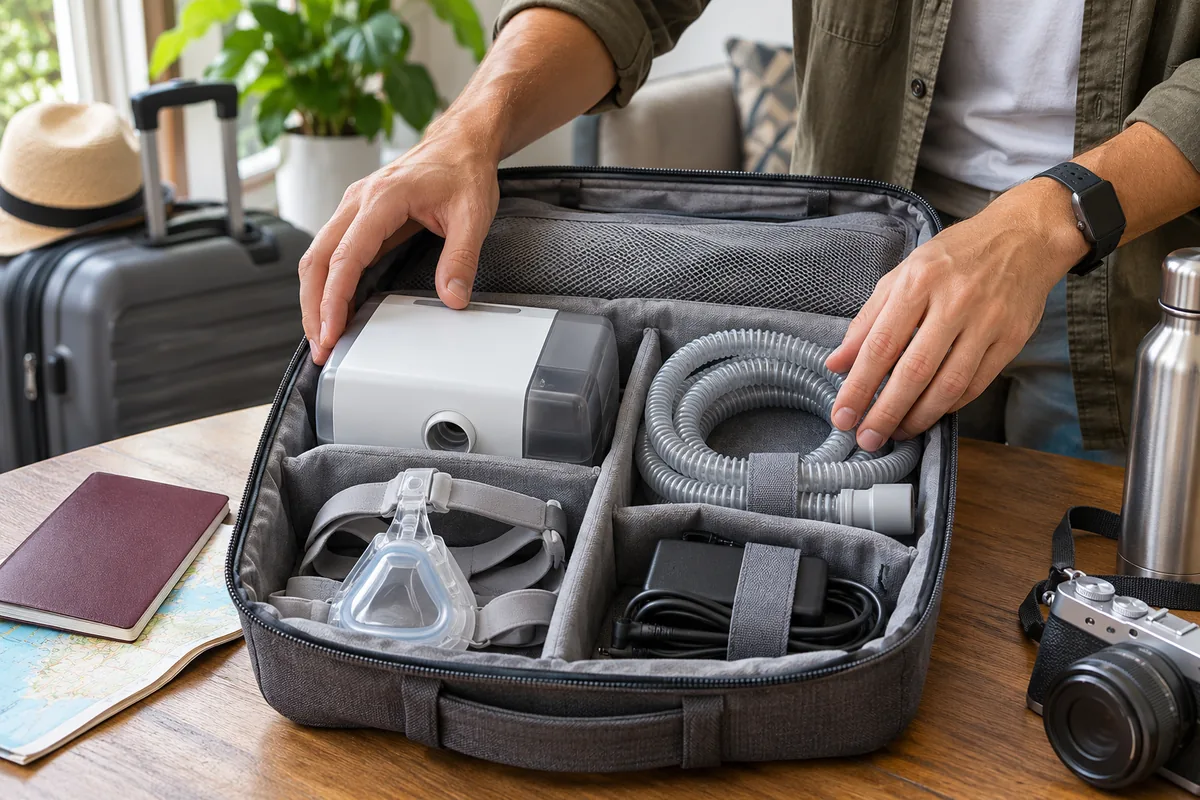
A CPAP machine may be one of the most familiar items in your bedroom and one of the easiest travel items to pack incompletely. The machine is in the bag, but its power brick is still behind the bedside table. The mask is present, but a connector is missing. The hotel has electricity, but the nearest outlet is across the room. These ordinary details can interrupt treatment unless they are checked before departure.
Planning CPAP and sleep apnea travel in Ajax is largely an exercise in making your usual night-time setup portable. It also involves clinical questions when symptoms are not well controlled, oxygen is used or the itinerary changes your sleeping conditions substantially. Your sleep clinician and equipment supplier can answer different parts of that preparation, while the airline determines its own requirements for carrying and using equipment.
Begin with the treatment you already use
Write down the device model, mask type and size, tubing, power supply and any accessories required for your prescribed setup. Keep a copy of the prescription and equipment provider’s contact details. A photograph of the assembled system can help you check that every part has been packed, especially if someone else helps prepare the bag.
If therapy is uncomfortable or you remain unusually sleepy, contact the sleep team before the trip. Travel is not an ideal moment to ignore a persistent mask leak or experiment with pressure changes. Ask whether the proposed altitude, overnight flights or remote accommodation raise additional concerns for you. A travel checklist can organize equipment, but it cannot determine whether current treatment is adequately controlling your sleep apnea.
Carrying the device and using it onboard are different questions
Contact each operating airline to ask about medical baggage, required documents and the exact device you intend to bring. Then ask separately about using it during the flight. An airline may accept a machine in the cabin while applying additional requirements to operation, batteries or seating. If the itinerary includes partner carriers, obtain answers from the airlines actually operating those flights.
The ResMed travel equipment resource illustrates the kinds of device-specific information manufacturers provide. Consult the equivalent instructions for your own model rather than assuming all CPAP machines have the same approval or power requirements. Keep any airline confirmation with your travel documents. Recheck arrangements after a flight or aircraft change, especially when you plan to sleep using the device onboard.
Do not build the plan around an unconfirmed seat outlet
Ask whether the airline permits medical equipment to use onboard power and whether a compatible battery is required. A seat advertised with power may have limits, may not supply the needed output or may be unavailable during parts of the flight. Your clinician or equipment provider can help determine the treatment implications of the flight length and anticipated sleep.
Ask for a realistic plan for delays as well as scheduled airtime. Include time spent in the airport if the device may be needed there. Keep the battery and power instructions together so you can explain the setup accurately to airline staff. Avoid buying an inexpensive adaptor simply because the connector appears to fit. Electrical compatibility involves the device’s requirements, the power source and the correct manufacturer-approved components.
Check voltage, plugs and battery compatibility separately
Read the power supply label and manufacturer instructions. A plug adaptor changes the physical connection; it does not necessarily convert voltage or provide the correct electrical output. If your route involves more than one country, confirm the requirements for each stop. Ask the equipment supplier which converter or cable is suitable for a vehicle or other nonstandard power source.
The manufacturer’s battery and adaptor guidance shows why compatibility is product-specific. Ask how your pressure setting and features such as heated humidification affect battery duration. Do not rely on a retailer’s broad claim that a battery lasts several nights. Test the approved setup before departure, following professional and manufacturer advice, so an unexpected limitation is discovered while alternatives remain available.
Verify battery transport rules before purchasing one
Airline and aviation rules apply to lithium batteries, including capacity limits, protection against short circuits and where they may be carried. Check the battery’s watt-hour rating and whether approval is needed. Do not assume a battery sold for medical equipment is exempt from all transport restrictions. Ask the airline about the exact model rather than describing it only as a CPAP battery.
The FAA’s lithium battery guidance provides aviation safety information, while your airline and departure authority provide the rules relevant to the journey. Keep labels readable and follow instructions for protecting terminals. A power bank that is allowed through one part of the trip may still face a carrier-specific approval requirement. Resolve those details before travel so the backup power plan is something you can actually bring.
Make airport screening straightforward
Pack the device where it can be removed without disturbing every other item. Protect clean masks and tubing from contact with screening bins. CATSA allows travellers to use a clear plastic bag for the respiratory device during screening or to leave attachments in the case while placing the main unit in a bin. Review CATSA’s CPAP screening guidance before a Canadian departure.
Check the procedures at airports used for return or connecting travel as well. A Canadian screening policy does not determine another country’s process. If you have a concern about handling clean equipment, explain it calmly before screening starts. Keep any documentation you choose to carry accessible, while recognizing that security screening and airline approval serve different purposes. Allow enough time to repack the device carefully instead of rushing away with a small component left behind.
Empty the humidifier and protect the equipment in transit
Follow the manufacturer’s instructions for preparing the machine for travel, including emptying the humidifier chamber. Pack the unit in a protective case and keep essential components together. Consider how the bag will be handled during boarding, a coach transfer or an unexpectedly crowded car. A fragile device at the bottom of a shared luggage pile can be damaged even during a short journey.
The ResMed CPAP travel instructions cover humidifier and packing considerations for its equipment. Use your own device’s instructions to determine what applies. If a cabin bag must be checked at the gate, tell staff that it contains medical equipment and discuss an appropriate arrangement. Know which components are essential for therapy so you can identify a missing item before leaving the airport.
Ask the hotel about the space beside the bed
Confirm that there is a suitable power outlet near the sleeping area and a stable surface for the machine. Ask whether power to room outlets is switched off when a key card is removed. If bringing an extension cord, check accommodation rules and use a safe arrangement that avoids trip hazards or unsuitable electrical connections.
On arrival, set up the equipment before you become tired. Check the outlet, tubing position and mask connection while reception or the host can still help. Keep the device where bedding cannot obstruct it, following its instructions. If changing rooms, repeat the check instead of assuming the new room has the same arrangement. A few minutes of setup in daylight can prevent a difficult search for working power at midnight.
Make a plan for humidifier water and cleaning
Follow the water and cleaning instructions for the exact chamber and device you use. If distilled water is required, ask where it can be obtained at the destination and how it is labelled locally. Do not assume mineral water, drinking water and distilled water are interchangeable. If the recommended water is unavailable, contact the equipment provider for a suitable temporary plan rather than guessing.
Pack the cleaning supplies recommended by the manufacturer and allow equipment to dry as directed. The FDA’s CPAP cleaning guidance explains why unapproved ozone or ultraviolet cleaning claims deserve caution. Avoid introducing unfamiliar disinfectants or fragrances during travel. Hotel housekeeping products may be convenient, but they are not necessarily appropriate for a device that delivers air through a mask while you sleep.
For camping or remote stays, rehearse the complete setup
List every night without dependable mains electricity and identify where recharging would occur. Consider the weather, the secure storage of equipment and how to keep the system clean. A campsite’s general statement that power is available may refer to a shared building far from the sleeping area. Obtain specific details before choosing the site.
Discuss the route with the sleep team and supplier, including altitude where relevant. If the proposed power arrangement cannot support your prescribed treatment, reconsider the accommodation or itinerary. Do not independently omit therapy for several nights because the holiday is short. A smaller travel machine also needs assessment for suitability, prescribed setup and compatible accessories. Try any approved new equipment at home before depending on it in a remote place.
Keep daytime safety in the plan
Sleep apnea can affect alertness, and travel may add sleep loss from an unfamiliar schedule. Do not drive when sleepy. Arrange another driver or transport option if you are not alert enough to drive safely, even when a rental car has already been paid for. Persistent daytime sleepiness deserves clinical advice rather than repeated attempts to compensate with caffeine.
The NHS sleep apnoea guidance describes symptoms and treatment. Ask your own clinician about alcohol, sedating medicines and other factors relevant to your situation. If you use oxygen or a more complex ventilation system, obtain a separate plan for that equipment and the flight. A CPAP travel guide should not be treated as sufficient preparation for every kind of respiratory support.
Practise packing from a different room
Set up your complete travel equipment in another room at home, using the case and accessories you intend to take. Follow the usual treatment instructions and confirm that the power supply, mask, tubing and required connectors are all present. If you have an approved travel battery or other unfamiliar accessory, follow the supplier’s directions for testing it. The exercise should reveal missing equipment before it becomes a problem in a hotel.
The next morning, pack the system as you would before changing accommodation. Check whether the humidifier can be emptied, cleaned and dried as required within your departure routine. Decide which items need their own protective compartment and where small parts will be stored. A simple photograph of the correctly packed case can be more useful than a general shopping checklist.
Ask a companion to identify the device bag and essential documents. They may need to retrieve them if you are unwell or a gate agent asks about medical equipment. Keep the bag identifiable without displaying unnecessary personal information. Repeat the check after any equipment change, since a new mask or machine may use a different connector that is easy to overlook.
Know how a replacement would be arranged
Save the equipment provider’s contact information, device serial number, prescription and any warranty or rental details. Ask what support is available while abroad and whether a local supplier could provide a compatible replacement if needed. Keep a small number of appropriate spare parts if your supplier recommends them, focusing on the components that are essential and difficult to replace.
If the machine fails, contact the supplier and sleep clinician for advice rather than using someone else’s settings or borrowing an unsuitable device. Record the problem and any error message. After returning to Ajax, arrange follow-up if therapy was interrupted or symptoms changed. For destination-specific vaccines and other travel preparation, book a consultation. Our jet lag and sleep planning guide can complement the equipment plan with questions about the travel schedule itself.