
June 30, 2025 · 10 min read
Breastfeeding and Travel in Ajax: Feeding Plans That Fit the Journey
Make breastfeeding travel plans in Ajax with practical advice on pumping, milk storage, airport screening, medication questions and feeding support abroad.
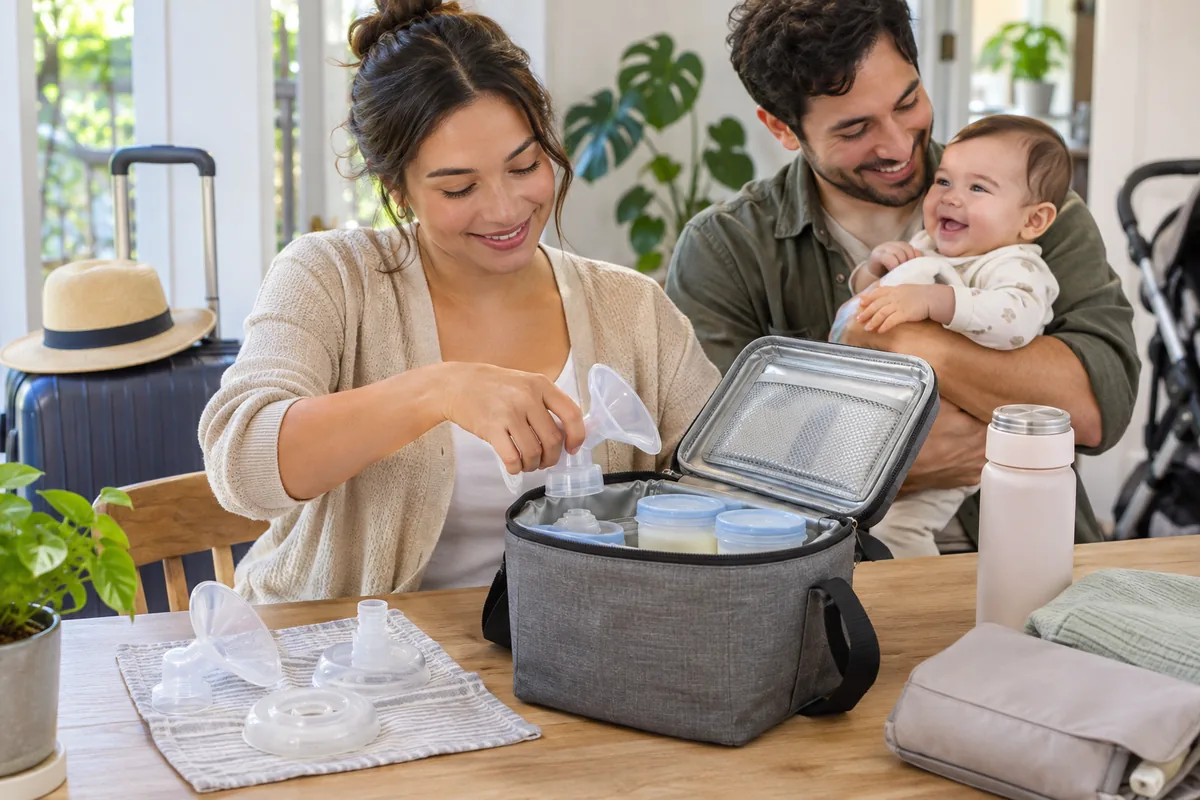
A breastfeeding travel plan begins with one distinction that is easy to overlook: will the child be travelling too? A family visit with the baby, a two-day conference without the baby and a holiday that includes a few hours of separation create different practical questions. One person may need a comfortable place to feed between flights. Another may need reliable pumping breaks and a way to bring milk home. Both deserve a plan that reflects their actual circumstances.
For breastfeeding and travel in Ajax, the aim is to make feeding workable throughout the journey while protecting the parent’s health and the child’s usual care. This does not require a perfect freezer supply or expensive equipment for every possible situation. It requires honest decisions about time, storage, support and what to do when an arrangement changes.
Start with the feeding pattern you have now
Describe an ordinary day before making changes for a trip. Note whether the child feeds directly, receives expressed milk, uses formula as well, or has begun complementary foods. Include any feeding difficulties, pain, supply concerns or specialist advice. A travel checklist built for exclusive pumping will not fit a family who rarely uses a bottle, and introducing several new routines immediately before departure can create unnecessary pressure.
Write down the parts of the trip that could disrupt that existing pattern. Perhaps a wedding ceremony has no natural break, the airport transfer is unusually long, or a work meeting begins before the hotel room is available. These details make a conversation with a lactation professional more useful. The question becomes how to manage a specific gap in feeding or expressing rather than how to prepare for every imaginable breastfeeding problem.
When your child comes with you
Plan feeding opportunities around the child’s cues and the journey’s practical limits. Identify where you can sit comfortably, how another adult can manage bags and how you will access water and food for yourself. Clothing that already works well at home may be more useful than an unfamiliar travel outfit. If you prefer privacy, think about seating and quiet spaces before depending on a room that may be occupied or unavailable.
The CDC’s breastfeeding travel chapter supports continuing breastfeeding during travel and explains why frequent opportunities matter. A healthy exclusively breastfed baby under six months generally does not need additional water, including in hot weather; seek individual advice if feeding or hydration is a concern. Avoid letting well-meant suggestions from relatives replace the plan agreed with the child’s clinician. A simple explanation before arrival can prevent repeated disagreements during feeds.
When you will be away from your child
Work backwards from the actual separation dates. Discuss how the child will be fed, who will give feeds and which supplies that caregiver needs. If expressed milk is part of the plan, start discussing preparation early enough to avoid a rushed attempt to create a large stored supply. There is no single quantity that every travelling parent should produce; feeding needs and available options differ.
Practise the caregiver’s routine before the trip, including handling containers and following storage instructions. Keep the plan visible where feeds will be prepared. Decide whom the caregiver can contact if the child is not accepting feeds as expected. Meanwhile, build expressing breaks into your own schedule. A calendar that lists only meetings and flights makes pumping seem optional even when it is an essential part of the day. The CDC’s travel recommendations for nursing parents address separation and transporting milk.
Give pumping a place, a power source and enough time
Contact the venue or accommodation with precise questions. Ask whether there is a private space, whether it can be accessed when needed and whether an outlet is available. A room that is suitable during office hours may be locked during an evening event. A long walk to another building can also make a short scheduled break impractical.
Test your equipment at home and pack the exact charger, connectors and parts it requires. A spare essential part may be more helpful than a second complete device, depending on your setup. If travelling internationally, check the manufacturer’s electrical specifications instead of assuming a plug adaptor solves every compatibility issue. Learning hand expression with appropriate support can provide another option if power or equipment fails. Keep contact information for your equipment supplier available without relying on an internet search abroad.
Make cleaning possible between sessions
Pumping plans need space for cleaning and drying, not just expressing. Ask whether you will have access to safe water, soap and a clean surface. Store clean parts separately from used ones and avoid placing equipment directly into an unfamiliar sink. If the itinerary makes cleaning after a session difficult, discuss a practical arrangement such as carrying additional clean sets rather than improvising a shortcut.
The CDC’s pump hygiene instructions explain cleaning after use and circumstances requiring extra sanitizing precautions. Follow the pump manufacturer’s directions too. Build the cleaning time into your schedule: a fifteen-minute break does not necessarily include time to walk to the room, set up, express, clean, dry and repack. Giving the organizer a realistic estimate is often more productive than trying to finish an impossible routine in silence.
Treat milk storage as a temperature plan
Decide where milk will go immediately after expression, how it will remain cold and where it will be stored on arrival. Confirm that the refrigerator is suitable for food storage. If the hotel proposes a shared refrigerator, ask how containers will be labelled and retrieved outside reception hours. Keep milk in appropriate clean containers, marked clearly enough that a tired caregiver can identify what should be used next.
The CDC’s breast milk storage guidance permits transport in an insulated cooler with frozen ice packs for up to twenty-four hours. That limit depends on the stated storage conditions; a warm bag does not become safe because the journey is shorter. Previously frozen or partly used milk has separate handling rules. Save the relevant guidance before departure and ask a qualified professional about uncertain storage rather than relying on smell or guesswork.
Walk through airport screening before departure day
Canadian screening rules allow breast milk in quantities above the usual liquid limit, whether or not the child is travelling, when it is presented for inspection. Ice and gel packs are also permitted under the relevant guidance. Review CATSA’s breast milk information and keep the milk accessible so it can be declared without emptying the whole bag.
Check the rules for every airport where you will be screened, including the return trip. A Canadian departure procedure does not determine what another country permits. Airline cabin allowances and security screening are separate matters, so confirm both if you are carrying a pump and cooler. Allow time for questions and inspection. Store any written airline response with the itinerary, and tell a travelling companion which bag contains the milk so it is not accidentally checked at the gate.
Discuss medication and vaccines before buying travel products
Tell the travel clinician that you are breastfeeding and give the child’s age, health history and feeding pattern. Bring your medicines and supplements as well as the destination list. Breastfeeding does not automatically mean that necessary treatment or vaccination must stop, but individual products and circumstances need review. Yellow fever vaccination is an example requiring particular assessment during breastfeeding; do not make the decision from a generic vaccine list.
Ask about the actual products you expect to use, including diarrhea remedies, insect repellents and malaria prevention. A medicine prescribed for the parent does not necessarily protect the child through breast milk. The CDC’s malaria and breastfeeding guidance explains why an infant may need their own prevention plan. Have the clinician write down the choices and any infant-specific instructions so a pharmacy purchase abroad does not become an uncertain substitution.
Leave room for your own meals, rest and comfort
Feeding preparation can become so focused on the child that the parent’s ordinary needs disappear. Pack an accessible snack, arrange opportunities to eat and drink, and ask another adult to take responsibility for some travel tasks. A parent who is feeding or pumping should not also be the only person tracking passports, accommodation messages and transfer changes.
At a conference or family gathering, decide in advance how you will step away without an extended explanation every time. A brief message to the organizer can be enough. If you are travelling alone, choose a lighter bag or a simpler connection where possible. These are logistical choices rather than measures of commitment to breastfeeding. The useful question is which arrangement allows feeding and recovery to fit into the day without asking one person to manage everything continuously.
Have an answer for breast pain or feeling unwell
New breast pain, redness, swelling or flu-like symptoms should not be dismissed as an inevitable result of travel. Seek timely advice, especially if symptoms are worsening or you feel significantly unwell. The NHS mastitis guidance describes symptoms and when medical help is needed. Do not start leftover antibiotics or use forceful massage in an attempt to clear a painful area without appropriate guidance.
Save the details of a lactation professional and a place to obtain medical assessment. These services answer different needs: help with latch or equipment does not replace evaluation of a possible infection. If you receive treatment abroad, explain that you are breastfeeding and provide the child’s age. Keep a record of the medicine and instructions. When the parent becomes ill, another adult may also need to take over transport, meals and childcare while feeding arrangements are reviewed.
Decide what you would do if milk cannot travel home
For a parent travelling without the child, transporting expressed milk can become a major project. Before committing to a shipping service or a large cooler, check delivery times, customs rules, temperature control and who will receive the package. Ask what happens if a delivery is delayed over a weekend or the recipient is unavailable. A service advertisement does not answer those individual questions.
Discuss a fallback feeding arrangement with the child’s caregiver before departure. If a supply cannot be used safely, the caregiver should know the agreed alternative and whom to contact for advice. The parent’s expressing plan may still serve a purpose even when bringing every container home is impractical. A lactation professional can help balance maintaining supply, comfort and the realities of storage without making the parent feel that a difficult shipment defines the success of the trip.
Keep labels and dates clear enough that the receiving caregiver can use the milk correctly without a lengthy phone call during a busy travel day. Good coordination matters as much at the receiving end as at the airport.
Plan a gentle return to the home routine
After a period of separation, allow time to see how feeding is going before scheduling a crowded first day home. Seek support if the child is struggling to feed, the parent has pain or there are concerns about intake or milk production. A journey can reveal a need for practical adjustments without meaning that the entire feeding plan has failed.
Keep the information that proved useful: the venue contact who arranged a room, the cooler setup that worked and the parts you nearly forgot. Our infant travel guide covers the wider questions of sleep, transport and infant care. To discuss destination-specific prevention while breastfeeding, request a travel consultation and bring your itinerary and medication list. Feeding plans work best when they are specific enough to use and flexible enough to survive an ordinary travel delay.