
May 1, 2025 · 10 min read
Asthma and Travel in Ajax: Prepare for Different Air and Routines
Plan for asthma and travel in Ajax by reviewing inhalers, destination triggers, daily routines and clear steps for getting help if breathing worsens.
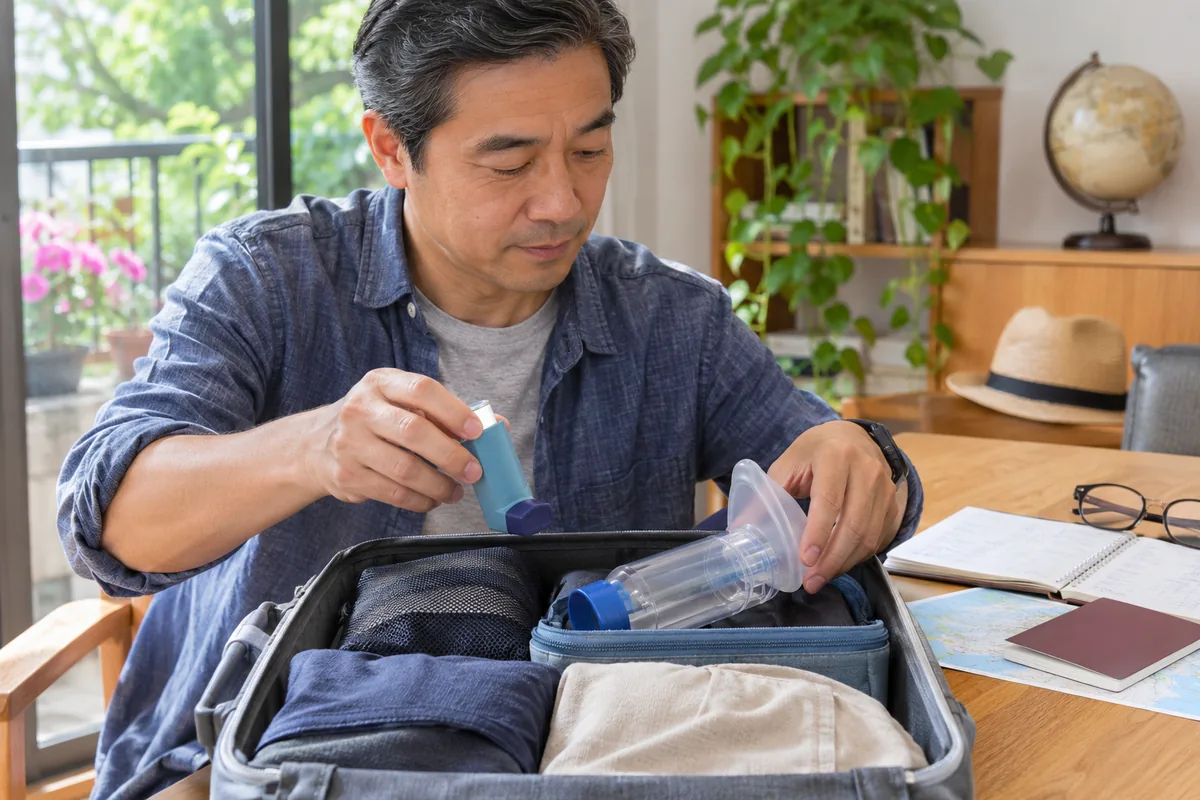
The inhaler is packed, the prescription is filled and the hotel is booked. Those are useful beginnings, but asthma preparation also needs to account for the surroundings you will breathe in. A smoky restaurant terrace, dusty accommodation, unfamiliar pollen season or long walk between terminals can turn an ordinary day into a different experience from life at home.
Asthma and travel planning in Ajax works best when it connects your usual treatment with the actual itinerary. That means discussing recent symptoms, checking how your devices are used and deciding how you will respond if the trip exposes a gap in the plan. The goal is to make travel decisions clear while you still have easy access to the clinician and pharmacist who know your treatment.
This guide helps organize that conversation. Medication changes, including any treatment used before exercise or during worsening symptoms, belong in your personal asthma action plan. An internet packing list cannot determine the right inhaler or dose for an individual traveller.
Begin with the last few weeks of breathing
Before focusing on the destination, describe how asthma has behaved recently. Mention nighttime waking, activity limits, symptoms during usual walks, use of reliever medication and any urgent visits. Bring the inhalers you actually use, even if one is nearly empty or was prescribed elsewhere. Your clinician needs an accurate picture of daily life, rather than a list reconstructed from memory.
A simple note can make the review more useful. Record when symptoms occur and what you were doing at the time. For example, coughing after climbing stairs, waking during the night and feeling well during quiet indoor days convey more information than saying asthma is “mostly fine.” If you have a peak flow meter and your clinician has asked you to use it, bring the recorded results and your usual reference values.
The CDC’s guidance for travellers with allergic conditions recommends reviewing symptom control and treatment before departure. It also notes the need to consider destination exposures and treatment supply. Allow time for follow-up if the review identifies a concern; a change made shortly before flying may need further assessment.
Ask specifically whether a recent exacerbation, infection or hospital visit changes the travel plan. Do not assume that an airline booking or travel insurance purchase confirms medical readiness. If breathing is currently worsening, seek clinical advice promptly rather than waiting for the scheduled pre-travel appointment.
Turn the action plan into something usable abroad
An asthma action plan should tell you what to do when you are well, when symptoms worsen and when you need urgent help. The CDC’s asthma action-plan guidance explains this progression. Ask your usual clinician to ensure the instructions match your current medications and devices before you travel.
Check for ambiguity. If the plan says to use a reliever, can you identify the correct product by its name and purpose? Inhaler colours and brand names may differ between manufacturers or countries. Some people have different inhalers for different roles, while others use a prescribed regimen that combines roles. Follow your own instructions rather than borrowing a companion’s routine.
Write down how to obtain advice if symptoms reach the plan’s warning stage. A phone number that works locally in Ajax may require an international dialling format, and the office may be closed when you arrive overseas. Include a route to local medical assessment so the plan does not depend entirely on speaking to someone at home.
Share a concise copy with a trusted companion. Explain where the medication is, how to help you access it and which signs mean emergency services should be called. Save an offline copy on your phone and a paper copy with the supplies. If you travel alone, consider how an unfamiliar helper could find the essential information.
Pack each device as a complete working set
Check how many doses remain, the expiry date and whether the device is ready to use according to its instructions. A spare inhaler helps only if it is the correct medicine and you understand how to use it. Arrange an appropriate extra supply for delays with your pharmacist and prescriber, while checking the destination’s medication rules.
If your regimen uses a spacer, bring the compatible spacer and any mask prescribed for it. Ask for a technique review before departure if there is uncertainty. Use the manufacturer’s instructions for cleaning and drying, and consider how you will follow them in the accommodation. A device still wet inside a packed bag may not be ready when needed.
Keep essential treatment in cabin baggage and readily accessible during other transport. CATSA provides specific screening information for inhalers, including how container size affects screening arrangements. Check the relevant authority for other airports on the route. Before handing over a bag at the gate, remove the medication and equipment needed during the journey.
For a prescribed nebulizer, confirm the power requirements, suitable adapters, cleaning arrangements and availability of the complete supply set. Ask the care team how to manage a power failure or device problem. Do not assume a plug adapter changes electrical voltage or that a hotel can provide a replacement machine.
Protect supplies according to product storage instructions. A bag left on a beach, in a parked car or against an icy cooling pack may expose medication to unsuitable conditions. Plan an accessible storage location for each day instead of deciding only where everything fits inside the suitcase.
Research the air around the activities
Read the itinerary through the lens of your known triggers. A wildlife drive may involve dust, a city stay may involve traffic pollution, and a family celebration may involve smoking or strong fragrances. These are questions to investigate, not reasons to assume every destination will cause symptoms. Your own pattern of triggers should guide the discussion.
Check air-quality information for the destination before departure and during the trip. Canada’s Air Quality Health Index guidance explains how health recommendations change with pollution levels and personal risk. Other countries may use different scales, so read the local health advice rather than treating the same number as equivalent everywhere.
Build an alternative into days with prolonged outdoor activity. If a walking tour falls on a day with poor air quality, could you move it, shorten it or choose an indoor activity? Make that decision before a non-refundable schedule or group expectation makes changing course difficult. Explain any limits to companions while everyone is still planning calmly.
For a trek, high-altitude stay or demanding sporting activity, discuss the actual elevation, exertion and distance from medical care with your clinician. The question is how your asthma and overall health fit the proposed activity. Being comfortable during everyday walks in Ajax does not answer every question about a substantially different environment.
Ask accommodation questions that have clear answers
“Allergy-friendly” can mean different things to different properties. Ask about the features relevant to your own triggers: whether smoking is permitted, whether animals use the room, whether windows open and whether strong fragrance products are routinely used. Keep the request practical and specific enough for staff to answer.
If dampness or mould has triggered symptoms before, pay attention to the room on arrival. Report visible problems or a strong musty smell promptly, and request another room when appropriate. Avoid spending the first night trying to determine whether an unsuitable room will become tolerable. Keep the booking contact details available so a change can be arranged without a long search through email.
Consider the route between the room and planned activities. A hillside property with many stairs may require more exertion than a map suggests. Ask about lifts or transport if those details matter to your current health. Choosing suitable accommodation can make daily routines easier without reducing the whole trip to a list of restrictions.
For visits with relatives, discuss smoking, pets and sleeping arrangements before arrival. A host may be happy to help but unaware of a trigger. A clear request gives them time to prepare and prevents the traveller from having to negotiate while already uncomfortable.
Keep treatment steady when the schedule changes
Travel days replace familiar cues with waiting areas, meals at unusual hours and sleep on a different clock. Ask your pharmacist or clinician how to time regular treatment when crossing time zones. Record which time zone any written instruction uses. A phone reminder that automatically changes time may not reflect the plan you were given.
Attach the routine to something reliable during the trip, such as checking the day’s medication schedule after waking. Keep a simple record if fatigue makes it difficult to remember whether treatment was taken. Do not take an extra dose simply because a reminder is confusing; follow the missed-dose instructions for the prescribed product or obtain professional advice.
Respiratory infections can worsen asthma. The CDC’s respiratory infections and asthma guidance supports continuing prescribed treatment, reviewing appropriate immunization and reducing exposure through measures such as hand hygiene, ventilation and a well-fitting mask in crowded indoor settings. Discuss your own circumstances when reviewing travel vaccinations.
Include regular asthma medicines when asking about new travel prescriptions or over-the-counter products. Mention other conditions and treatments as well. If you receive an injection or infusion on a schedule, arrange its timing with the prescribing team before departure. Your holiday calendar should be coordinated with established care rather than quietly interrupting it.
Know when the excursion must stop
If symptoms begin during an activity, follow the personal action plan and move away from an apparent trigger when possible. Tell a companion or guide early. It is easier to arrange a return from the first part of a walking route than after continuing farther while breathing becomes more difficult.
Severe breathlessness, difficulty talking or walking because of breathing, blue or grey lips, or symptoms that are rapidly worsening require emergency help. Use prescribed emergency treatment as directed and call the local emergency number; in Canada, call 911. Do not wait for a routine callback when there are danger signs. The CDC asthma action-plan tool identifies these signs as reasons for immediate action.
Do not assume every episode of chest discomfort or shortness of breath is asthma. New, unusual or severe symptoms need assessment, especially if they do not respond as expected to your prescribed plan. A successful previous trip does not establish that a new episode is harmless.
Before leaving accommodation, know where nearby medical care is located and how to contact it. For organized tours, ask the operator how medical help would be reached from remote stops. Discuss insurance coverage for asthma-related care and the proposed activities directly with the insurer, including any questions about recent treatment changes.
Make the return home part of the plan
Keep enough medication accessible for the journey home and possible delays. If you needed medical care abroad, obtain a treatment summary and record any medicine supplied. Share it with your usual clinician, particularly if your treatment changed or symptoms remain different from normal.
Notice which arrangements worked. Perhaps the medication pouch was easy to reach, but the hotel request was too vague; perhaps your day bag protected the inhaler, but the schedule made regular treatment harder to remember. Those observations can improve the next trip without turning one difficult day into a reason to avoid travel altogether.
Our guide to travelling with prescription medication in Ajax covers the documentation and border questions that accompany medical supplies. To connect the itinerary with destination prevention, book a travel health appointment and bring your asthma action plan. Coordinating that review with your usual asthma care gives each part of the trip a clearer, more workable foundation.