
May 25, 2025 · 9 min read
Accessible Travel Health in Ajax: Plan Around What You Need
Prepare for accessible travel from Ajax with practical questions about transport, rooms, medication, communication, equipment and support along your route.
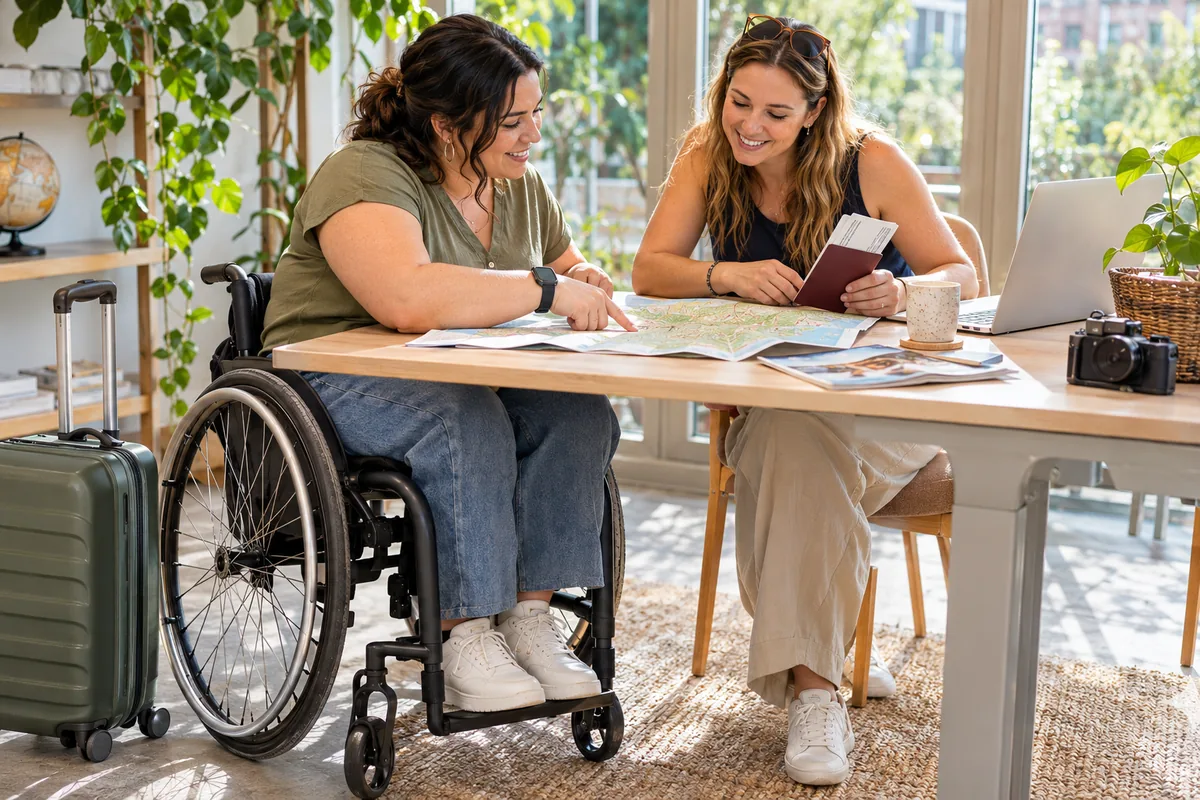
An accessible room can mean very different things to different travellers. One person needs space beside a bed for a transfer. Another needs visual alerts, predictable lighting, clear written instructions, or a quiet place to recover after a busy day. A useful travel plan starts with the person’s requirements, not a symbol beside a hotel listing.
Accessible travel health in Ajax connects those practical requirements with the health preparation for the journey. The aim is to make transport, accommodation, medication, communication, and support work together. Disability does not describe one set of needs, and it does not automatically imply illness or a need for a companion. Good planning respects your experience and gives you specific information for the decisions ahead.
Describe what a workable travel day looks like
Begin with a familiar day at home. Consider how you move between places, communicate, eat, take medication, use a washroom, manage sensory input, and rest. Identify the parts you handle independently and the situations in which a particular adjustment helps. You do not need to disclose an entire medical history to every booking provider to explain those requirements.
Turn broad labels into practical questions. Instead of asking whether a tour is accessible, ask about step-free access, walking distances, seating, captioning, lighting, or the pace of instructions as relevant to you. The answer should describe what exists and what can be arranged. It should leave you able to judge suitability rather than relying on someone else’s assumptions.
The CDC guidance for travellers with disabilities emphasizes assessing the individual itinerary and checking necessary accommodations throughout the trip. Use that idea from the first transfer to the final journey home. A comfortable hotel does not solve an inaccessible station between the airport and the hotel.
Review the route one handover at a time
Map each point where a service changes: home to taxi, taxi to terminal, terminal to aircraft, and arrival to accommodation. Ask who provides assistance at each stage, where you meet them, and how to contact them if the arrangement fails. Keep the answer with the booking rather than scattered across several email accounts.
Allow enough connection time for the tasks your journey requires. A short connection may leave little room for a transfer, accessible washroom visit, communication delay, or equipment return. Ask about the actual airport layout and process instead of relying on the minimum connection time shown by a booking system. A slightly longer journey can offer a much more predictable experience.
Contact the carrier early about assistance and any documentation it requests. Service arrangements and rules differ by journey and provider. The Canadian Transportation Agency’s travel planning guide explains issues to discuss, including assistance, seating, mobility aids, and support persons. Confirm the applicable arrangements directly and save the response in an accessible format.
Ask accommodation providers for useful evidence
For physical access needs, photographs and measurements can answer questions that an “accessible” label cannot. Depending on your requirements, ask about door widths, turning space, bed height, bathroom layout, shower access, and the route from reception to the room. Request information about the actual room category you are booking, rather than a different demonstration room.
For hearing, vision, cognitive, or sensory needs, ask about the features that support you. That may include visual alarms, written check-in instructions, reliable orientation information, reduced noise, or control over room lighting. Explain the useful adjustment clearly. A concise request such as written directions with landmarks can be easier for staff to fulfil than a broad request for additional assistance.
Confirm any essential feature in writing and explain why a substitute room would not work. Ask what happens if the assigned room becomes unavailable. Keep a short list of alternative accommodation with suitable features if that is practical for the destination. The purpose is to reduce the number of decisions you would need to make while tired after arrival.
Apply the same approach to one outing you particularly want to enjoy. For a museum visit, for example, the relevant questions might concern entry queues, accessible transport, seating, audio descriptions, captioned material, or a quiet exit route. Choose the questions that match your needs and ask the venue directly. Then check the restaurant or transport connection afterward rather than treating the museum as an isolated booking. You may find that a small change, such as reserving a different entry time or eating nearby, makes the whole day work. Keep the activities that matter to you central to the planning, so access research supports the holiday rather than consuming it.
Prepare for airport screening in a way that suits you
Review the screening information for the airports on your route, including return and transit points. Tell screening staff about relevant assistance needs or medical devices before the process begins. You can ask for explanations, additional time, or privacy where available. Requirements abroad may differ from the process you know in Canada.
CATSA describes assistance for travellers with mobility, sensory, cognitive, and medical needs, including options for private screening. Its accessibility and medical needs guidance can help you prepare for Canadian screening. If someone who is not travelling needs to assist you through the checkpoint, discuss authorization with the airline in advance.
Choose how you want to communicate in a busy environment. A brief printed card, a note on your phone, or a communication device may help explain the specific adjustment you need. Keep control over what information you share. A companion should support the communication you prefer rather than automatically answering questions directed to you.
Plan equipment transport and power together
If you use a powered mobility aid or medical device, gather the model details, battery information, dimensions, and handling instructions. Ask the carrier how the item will be transported, when you must transfer if relevant, and where it will be returned. Describe any parts that should not be lifted, disconnected, or removed without instruction.
Photographs of equipment before travel and concise handling notes can help you document its condition and explain its use. Consider which small essential components you can keep with you. Ask about battery restrictions and in-flight use directly; permission to transport a device is not necessarily permission to operate it during every part of the journey. Consult Canada’s medical device travel guidance.
At the destination, check voltage compatibility, charging access, and power reliability with the manufacturer and accommodation provider. A plug adapter alone does not establish that a device can operate safely. Identify a practical response to equipment failure, including a contact for repairs or a suitable backup where possible. Do not assume an unfamiliar rental device will meet the same needs as your own.
Keep medicines and daily supplies within reach
Discuss the trip with your pharmacist or prescribing clinician if you need advice on time zones, storage, or maintaining a treatment schedule. Carry medicines in original labelled packaging with an up-to-date list. Confirm destination and transit-country rules for each medicine, especially when advance authorization may be required. Canada’s travelling with medication guidance explains these preparations.
Work out how you will manage the routine on a travel day. Can you reach the medicines from your seat? Is suitable water available? Do you need a private space, a clean surface, or accessible packaging? These practical details deserve the same attention as the total quantity packed. Keep essential supplies in carry-on luggage and plan for delays within the relevant entry limits.
If you use disposable or specialized supplies, check whether replacements are realistically available where you are going. Familiar brand names may not correspond to identical products abroad. A small trial pack of an alternative is more useful to assess at home than during an unexpected shortage. Our prescription medication travel guide offers additional questions for the preparation appointment.
Discuss personal health needs without losing the wider plan
A disability does not by itself determine which vaccines or preventive medicines you need. Those decisions depend on the destination, activities, medical history, and any treatment affecting the immune system. Bring your usual vaccine record and a list of relevant conditions and medicines to the consultation. Explain any appointment access needs when booking so the discussion itself is workable.
Ask your regular treating team about concerns specific to your condition or equipment. Depending on the person, useful topics might include pressure care, temperature regulation, pain management, fatigue, or changes to eating and drinking routines. Avoid adopting a generic travel routine that conflicts with a plan already developed for you. The aim is continuity with sensible adaptations.
Build rest and flexibility into the itinerary according to your own experience. One traveller may prefer several short outings; another may find repeated transport transfers more tiring than a single longer activity. Test the proposed schedule against what works for you, including the effort required to get ready and return to the room. The sightseeing timetable is only part of the day.
Agree on support roles before departure
If you travel with a support person, discuss the tasks involved and the boundaries you both want. Clarify help with communication, transfers, medication, personal care, or decision-making only where relevant. A friend joining a holiday may not automatically understand a role that has been left unstated. Written notes can reduce repeated explanations without replacing your preferences.
Ask carriers and tour providers what their staff can actually assist with. Do not assume that a booked assistance service includes personal care or every transfer you might need. Equally, do not accept unnecessary dependence when an accessible arrangement would let you manage independently. Specific questions help identify the support that is useful to you.
Consider what happens if the usual support person becomes ill or separated from you. Keep key contacts accessible and identify another source of help where feasible. For solo travel, this may mean a reliable local provider, a hotel contact, or someone at home who knows the itinerary. The plan should reflect the support you choose, without treating travelling alone as inherently unsuitable.
Make emergency arrangements usable
Identify appropriate medical care near the places where you will stay and consider how you would reach it. Ask about communication access, physical access, and any particular clinical service you may require. A hospital’s distance on a map does not tell you whether the available transport or assessment process will work for your needs.
Discuss existing conditions and relevant equipment with your insurer and request written clarification of coverage. Ask about emergency treatment, evacuation, assistance arrangements, and any exclusions affecting your itinerary. The Government of Canada’s travel insurance guidance outlines questions to raise before buying a policy. Save the assistance details somewhere that does not depend on one device remaining charged.
Keep a short health summary in a format you can use and share when necessary. Include essential medicines, allergies, communication preferences, and emergency contacts, with more detailed records stored separately. Before leaving Ajax, a travel health consultation can help connect the destination risks with your existing care plan. The result should be a journey arranged around your needs and the experiences you want to have.